Explanation
 Explanation:
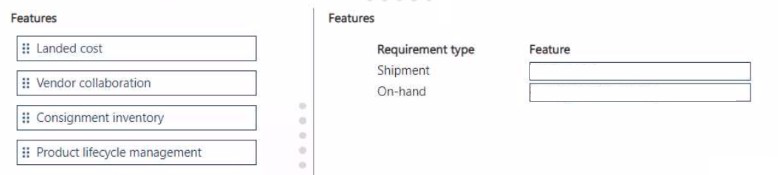
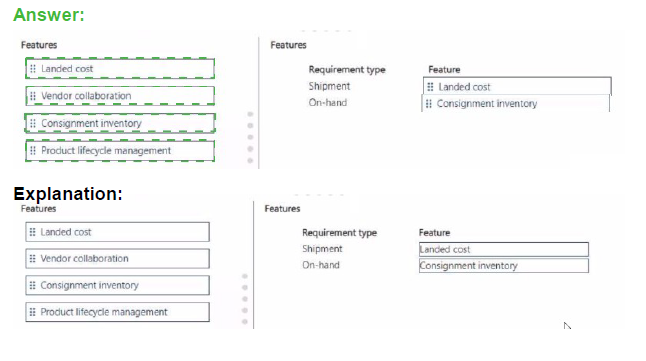
The question requires matching Dynamics 365 features to specific requirement types for VendorC: Shipment and On-hand. Different vendor collaboration and inventory management features address different aspects of the vendor relationship. Shipment requirements typically involve tracking and managing incoming goods, while on-hand requirements relate to inventory ownership and availability.
Correct Options:
Requirement type: Shipment | Feature: Vendor collaboration
Vendor collaboration enables vendors to manage purchase order confirmations and shipment information directly. For shipment requirements, this feature allows VendorC to update delivery dates, provide advanced shipping notices, and manage packing slips, improving visibility and coordination of incoming shipments.
Requirement type: On-hand | Feature: Consignment inventory
Consignment inventory allows VendorC to maintain ownership of goods until they are consumed or sold. For on-hand requirements, this feature enables tracking of vendor-owned inventory at your warehouse, providing accurate visibility of available stock while deferring payment until actual usage.
Incorrect Options:
Landed cost - This feature manages additional costs associated with shipping and importing goods, such as freight and duties, but doesn't directly address shipment collaboration or on-hand inventory ownership requirements.
Product lifecycle management - This feature manages product versions, engineering changes, and product retirement, which relates more to product design and engineering than to vendor shipment or inventory ownership requirements.
Using features for opposite requirement types - Vendor collaboration primarily addresses shipment coordination, not on-hand inventory, while consignment specifically addresses on-hand vendor-owned inventory, not shipment tracking.
Reference:
Microsoft Learn: Vendor collaboration and Consignment inventory setup
 Description automatically generated with medium confidence