You need to configure settlement reports for the finance team.
Which processes should you use? To answer, select the appropriate options in the answer area.
NOTE: Each correct selection is worth one point
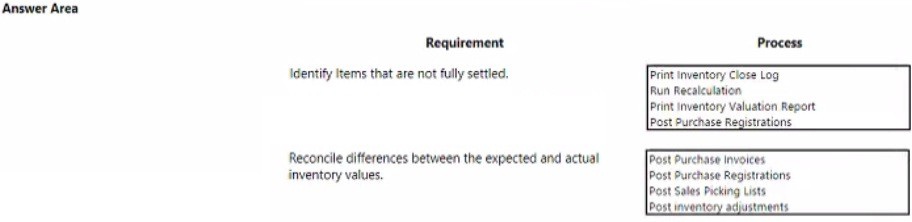
Which processes should you use? To answer, select the appropriate options in the answer area.
NOTE: Each correct selection is worth one point
Show answerHide answer
Explanation
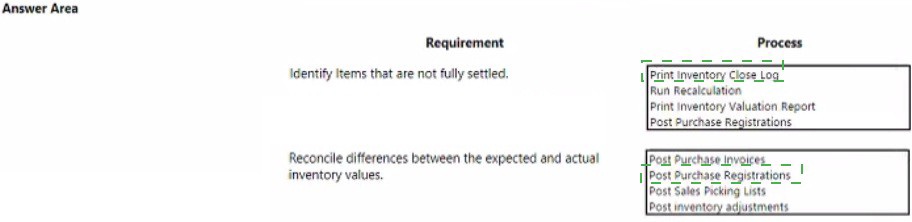
Explanation:
The finance team needs settlement reports to finalize inventory financial periods. This requires a closing process that identifies unsettled transactions, recalculates costs to resolve value discrepancies, and produces a final valuation report. These steps ensure inventory financial records are accurate and complete before the period is locked.
Correct Option:
Print Inventory Close Log:
This is a prerequisite report that identifies unposted or unsettled transactions (like open inventory receipts) that would prevent a clean period close. It must be reviewed and resolved.
Run Recalculation:
This process recalculates the inventory value for all items based on the costing method (FIFO, LIFO, etc.). It reconciles expected and actual inventory values, which is the core requirement for financial settlement.
Print Inventory Valuation Report:
This is the final, authoritative financial report showing the closing inventory value for the period. It is the key deliverable for the finance team to review and archive.
Incorrect Option:
Post Purchase Registrations / Invoices / Sales Picking Lists:
These are daily operational posting processes, not periodic closing steps. Running these during close would introduce new, unsettled transactions, undermining the goal of finalizing the period.
Post Inventory Adjustments:
While sometimes necessary to correct counts, this is a corrective operational action. The settlement process uses recalculation to adjust values systematically based on cost layers, not manual adjustments.
Reference:
Microsoft Learn: "Close inventory" procedures (Dynamics 365 Supply Chain Management). The closing workflow specifically involves generating the close log, running recalculation, and printing the valuation report to settle and finalize inventory financial periods.