Guidewire certification · Exam InsuranceSuite-Developer

InsuranceSuite-Developer Mock Exam Page 5

Associate Certification - InsuranceSuite Developer - Mammoth Proctored Exam

Free InsuranceSuite-Developer mock exam questions 41–50, each with the answer and an explanation.

20 questions · 30 minutes · free, no sign-up

Free InsuranceSuite-Developer questions

41–50 of 62 free
Question 41 Choose 1
What type of Assessment Check ensures that applications have monitoring and logging frameworks in place?
Show answerHide answer

Correct answer: D Operations

Explanation

Answer Option (Which option is correct) D. Operations
Explanation:

Monitoring and logging are operational capabilities used to observe and support a deployed application. They belong to an Operations assessment rather than an upgrade check or a purely functional configuration check.

Verification note: The exact option selection could not be independently verified from accessible official documentation. Relevant official topic links are provided, but some exact configuration or training rules require the product Configuration Guide or Cloud Standards behind sign-in. The source key is retained.

Why the other options are incorrect:

A. Upgrades:
Upgrade checks address version-transition readiness. Monitoring and logging are operational support capabilities. Those concerns belong to a different assessment area.

B. Security:
Security checks can include observability requirements. The prompt specifically groups monitoring and logging under an assessment type. The PDF selects Operations rather than Security.

C. Performance:
Performance checks evaluate resource use and response behavior. They do not name the overall monitoring framework assessment. The source places this requirement under Operations.

References:

Guidewire - Automated Cloud Assurance and inspection sources

Guidewire Cloud Standards - Sign-in required
Question 42 Choose 2
A developer wants to manually trigger a build chain in TeamCity to generate a deployable Docker image for a specific commit. According to the process described in the training, what are the key initial steps to achieve this? (Choose 2)
Show answerHide answer

Correct answer: C, E Access TeamCity via Guidewire Home.Select the desired build configuration and trigger the build.

Explanation

Answer Option (Which option is correct) C. Access TeamCity via Guidewire Home.

Answer Option (Which option is correct) E. Select the desired build configuration and trigger the build.
Explanation:

Select and run the appropriate TeamCity build configuration to produce a build for the intended source revision. The source describes subsequent build promotion from development through pre-production to production using Guidewire Home. A direct source-code commit to production is not the same as promoting a verified build.

Why the other options are incorrect:

A. Update the application's configuration resources in Lifecycle Manager:
Lifecycle configuration resources affect application setup. They are not the initial manual-build selection step. Choose the intended TeamCity build configuration.

B. Access the Automated Builds app in Guidewire Home:
The source specifically names access to TeamCity. This alternative uses a different app label. Its availability must be confirmed for the training release.

D. Configure a new monitor in Datadog:
A Datadog monitor observes events or metrics. It does not produce the Docker artifact. The build pipeline performs that task.

References:

Guidewire - TeamCity builds and dependencies

Guidewire - Source repository and build promotion
Question 43 Choose 1
Succeed Insurance would like to count the number of High Priority Activities that are related to a Job. Which approach follows best practices to meet this requirement?
Show answerHide answer

Correct answer: C var count = job.Activities.countWhere(\act -> act.Priority == TC_HIGH); print(String.format("Count of High Priority Activities: %s", {count}))

Explanation

Answer Option (Which option is correct) C. var count = job.Activities.countWhere(\act -> act.Priority == TC_HIGH); print(String.format("Count of High Priority Activities: %s", {count}))
Explanation:

countWhere expresses a count of elements satisfying a predicate without explicitly building a separate filtered list. In this question the predicate is the activity priority. An extra list conversion or a manual counter adds work or complexity to the same collection-level calculation.

Why the other options are incorrect:

A. var count = 0; job.Activities.each(\act -> act.Priority == TC_HIGH) { count += 1 }; print(String.format("Count of High Priority Activities: %s", {count})):
The each expression does not implement the displayed conditional counting syntax. It mixes a predicate and a following block. The shown countWhere expression states the count directly.

B. var actList = job.Activities.toList(); var count = actList.countWhere(\act -> act.Priority == TC_HIGH); print(String.format("Count of High Priority Activities: %s", {count})):
Converting to a list creates an additional collection representation. The original activity collection can be counted. That extra conversion is unnecessary here.

D. var count = 0; for (act in job.Activities) { if (act.Priority == TC_HIGH) { count += 1 } }; print(String.format("Count of High Priority Activities: %s", {count})):
A manual loop can count the matching activities. It requires an explicit mutable counter. countWhere expresses the same predicate more directly.

E. var count = 0; job.Activities.where(\act -> act.Priority == TC_HIGH) { count += 1 }; print(String.format("Count of High Priority Activities: %s", {count})):
where normally returns the filtered collection. The trailing counting block is not the shown collection-counting form. Use a count operation for the result.

References:

Gosu language project - Operators, loops, functions, and properties

Guidewire - Query-backed collections and buildBaseQuery
Question 44 Choose 2
An InsuranceSuite implementation project is preparing for deployment to the Guidewire Cloud Platform. Which two Cloud Delivery Standards must be met before deployment? (Select two)
Show answerHide answer

Correct answer: D, E New entities and new columns added to existing entities use a customer suffix such as _SiLog files contain no PII (Personally Identifiable Information) as clear text

Explanation

Answer Option (Which option is correct) D. New entities and new columns added to existing entities use a customer suffix such as _Si

Answer Option (Which option is correct) E. Log files contain no PII (Personally Identifiable Information) as clear text
Explanation:

Cloud delivery checks distinguish mandatory readiness requirements from optional implementation practices. The source emphasizes naming customizations consistently, preventing clear-text personal information in logs, and resolving data issues that block upgrades. Release and suffix requirements should be checked against the specific cloud-delivery standard version.

Verification note: The exact option selection could not be independently verified from accessible official documentation. Relevant official topic links are provided, but some exact configuration or training rules require the product Configuration Guide or Cloud Standards behind sign-in. The source key is retained.

Why the other options are incorrect:

A. There are no instances of single statements with multiple expansion operators(*):
The ban on every multiple expansion statement is not verified. The source distinguishes mandatory cloud standards from other advice. The exact rule should be checked rather than inferred.

B. GUnit tests must be combined into suites and executed in Studio prior to each code deployment:
Running tests in Studio is not shown as the universal deployment prerequisite. The cloud pipeline can run server tests. The specific suite requirement needs release documentation.

C. The default system user su is configured as the second argument of the runWithNewBundle method:
The source should not be treated as mandating the system user. User context depends on the intended transaction authorization. Verify the applicable identity requirement.

References:

Guidewire Security - Logging sensitive information

Guidewire Security - Logging, monitoring, and audit governance
Question 45 Choose 1
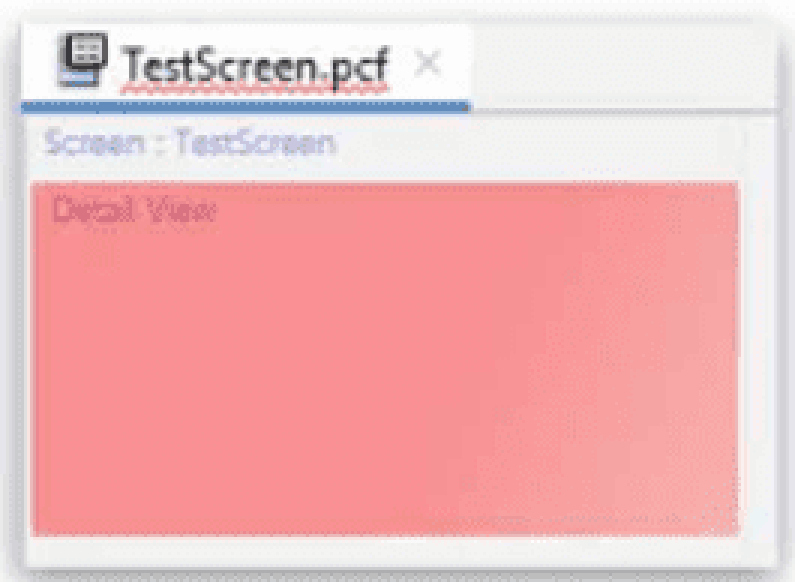
Given the following screen showing a DetailView in Guidewire Studio highlighted in red: Which single item added directly to the detail view will correct the error shown, with no further errors?

Visual content transcription:
TestScreen.pcf contains a Detail View highlighted in red, with no input column shown.

InsuranceSuite Developer question 72, image 1
Show answerHide answer

Correct answer: D Add an input column to the detail view

Explanation

Answer Option (Which option is correct) D. Add an input column to the detail view
Explanation:

A DetailView organizes its inputs through InputColumn containers. In the Card hierarchy described by the source, a DetailView sits between the Card and the InputColumn. A row iterator belongs to a ListView rather than replacing the required detail-view structure.

Verification note: The exact option selection could not be independently verified from accessible official documentation. Relevant official topic links are provided, but some exact configuration or training rules require the product Configuration Guide or Cloud Standards behind sign-in. The source key is retained.

Why the other options are incorrect:

A. Add a row iterator to the detail view:
A RowIterator repeats list rows. The screenshot shows a DetailView. Its missing input layout is not repaired by a list iterator.

B. Add a toolbar to the detail view:
A Toolbar holds commands. It does not supply a container for input fields. The DetailView still lacks its required input column.

C. Add a list view to the detail view:
A ListView is another panel structure. Adding it does not directly provide the detail-view input layout. The source selects an InputColumn.

References:

Guidewire product documentation - Configuration Guide access
Question 46 Choose 1
Which rule is written in the correct form for a rule which sets the claim segment and leaves the ruleset?
Show answerHide answer

Correct answer: A CONDITION: (claim: entity.Claim) return claim.Segment == null
ACTION: (claim: entity.Claim, actions: gw.rules.Action) claim.Segment = TC_AUTO_LOW; actions.exit()

Explanation

Answer Option (Which option is correct) A. CONDITION: (claim: entity.Claim) return claim.Segment == null
ACTION: (claim: entity.Claim, actions: gw.rules.Action) claim.Segment = TC_AUTO_LOW; actions.exit()
Explanation:

The rule condition returns a boolean and checks whether the claim segment is unset. The action assigns the desired segment and calls the rule action API. Keep the comparison in the condition and the assignment in the action; compare exit behavior with the target rules API when the requirement specifically says to leave the ruleset.

Verification note: The selected rule calls actions.exit(), but the stem specifically says to leave the ruleset. Verify the distinction between exit and exitToNext/exitRuleset against the target rules API.

Why the other options are incorrect:

B. CONDITION: (claim: entity.Claim) if (claim.Segment == null) {claim.Segment = TC_AUTO_LOW}
ACTION: actions.exit():

The condition contains a state assignment. A condition should decide whether the action applies. The mutation belongs in the action.

C. CONDITION: (claim: entity.Claim) return claim.Segment == null
ACTION: (claim: entity.Claim, actions: gw.rules.Action) claim.Segment == TC_AUTO_LOW; actions.exitRuleset():

The action uses equality comparison instead of assignment. It therefore does not set the segment. The exit call cannot repair that missing update.

D. CONDITION: (claim: entity.Claim) return claim.Segment = TC_AUTO_LOW
ACTION: (claim: entity.Claim, actions: gw.rules.Action) actions.exit():

The condition assigns a segment instead of testing the unset state. It does not return the intended predicate. The rule separates the eligibility test from its mutation.

References:

Guidewire-authored PolicyCenter 10.1.2 - Rules and validation signatures

Gosu language project - Operators, loops, functions, and properties
Question 47 Choose 1
An insurer has extended the ABContact entity in ContactManager with an array of Notes to capture information of interest about the contact over time. A developer has been asked to write a function to process all the notes for a given contact. Which code satisfies the requirement and follows best practices?
Show answerHide answer

Correct answer: B for ( note in anABContact.Notes) { //do something }

Explanation

Answer Option (Which option is correct) B. for ( note in anABContact.Notes) { //do something }
Explanation:

A for-in loop visits each note in the contact Notes collection directly. It does not need a manually maintained index and does not stop at the first matching note. A while condition that only checks whether a note exists does not itself advance through the collection.

Why the other options are incorrect:

A. while (exists (note in anABContact.Notes)) { //do something }:
The while condition tests existence without advancing. It can repeat indefinitely while a note still exists. A for-in loop visits each note once.

C. for (i = 1..anABContact.Notes.length) { //do something }:
The manual index starts at one. Gosu collection indices are zero-based. Direct iteration avoids that index-boundary risk.

D. var aNote = anABContact.Notes.firstWhere( \ note -> note.Author != null) //do something:
firstWhere returns one qualifying note. It does not process every note. The requirement concerns the entire collection.

References:

Gosu language project - Operators, loops, functions, and properties

Guidewire - Query-backed collections and buildBaseQuery
Question 48 Choose 1
In the screenshot below A developer has added a tab labeled Delinquencies to the tab bar of BillingCenter. This tab will contain several pages. The first page in the tab will display a summary of the currently selected delinquency, the second page will show the associated policy, and the third page will show the associated account. What PCF container will be used to configure this requirement?

Visual content transcription:
The BillingCenter tab bar includes the added Delinquencies tab. Small tab labels are retained in the image.

InsuranceSuite Developer question 79, image 1
Show answerHide answer

Correct answer: B A location group

Explanation

Answer Option (Which option is correct) B. A location group
Explanation:

A LocationGroup groups related pages under a shared navigation location or heading. The individual pages keep their own functions while appearing together in the tab or sidebar. An InputSet shares fields rather than organizing page navigation.

Verification note: The exact option selection could not be independently verified from accessible official documentation. Relevant official topic links are provided, but some exact configuration or training rules require the product Configuration Guide or Cloud Standards behind sign-in. The source key is retained.

Why the other options are incorrect:

A. A location ref:
A LocationRef points to one location. The new tab contains several related pages. A group is needed to organize them together.

C. A location ref iterator:
A LocationRefIterator repeats location links from data. The pages listed here form a fixed related set. The source selects a LocationGroup.

D. A location:
A single location does not express the stated grouping. The tab needs a summary and two related pages. The chosen container must organize those pages together.

References:

Guidewire product documentation - Configuration Guide access
Question 49 Choose 1
What is a commit in Git?
Show answerHide answer

Correct answer: C It is a snapshot of all of the files in an entire project at a specific point in time.

Explanation

Answer Option (Which option is correct) C. It is a snapshot of all of the files in an entire project at a specific point in time.
Explanation:

A commit records a snapshot of the project at a particular point in its history. Branches are movable references to commits, while tags name particular points. A commit is not just the list of edits to one file.

Why the other options are incorrect:

A. It is a floating pointer to a stream of changes made to a project at a point in time:
A floating reference describes branch-like behavior. A commit is a fixed recorded snapshot. Its content does not move when the branch advances.

B. It is a fixed pointer to a set of changes with an easily readable name:
A readable fixed name resembles a tag. That name can point to a commit. It is not the commit snapshot itself.

D. It is a list of files that includes all of the changes made to each file over time:
A file history lists changes over time. One commit represents one project state. History is built from the connected commits.

References:

Git project - Commits and branch references
Question 50 Choose 2
A Guidewire developer is assigned to create a new List View (LV). Which two objects are required for the list view to appear on the Studio canvas with no errors or red showing? (Select two)
Show answerHide answer

Correct answer: A, E A row iteratorA row

Explanation

Answer Option (Which option is correct) A. A row iterator

Answer Option (Which option is correct) E. A row
Explanation:

A ListView needs a row iterator and a row to describe the repeated data and its row layout. Text inputs and Add or Delete buttons are not the structural pair requested by this question. Cells display values within the row but do not replace the iterator.

Verification note: The exact option selection could not be independently verified from accessible official documentation. Relevant official topic links are provided, but some exact configuration or training rules require the product Configuration Guide or Cloud Standards behind sign-in. The source key is retained.

Why the other options are incorrect:

B. A text input:
A TextInput edits an individual value. It does not provide the repeated-row structure. The ListView needs a row and iterator.

C. Add and Delete buttons:
Add and Delete controls are optional interactions. They do not define the list rows. The structural containers must exist first.

D. A text cell:
A TextCell displays a value within a row. It cannot replace the row iterator. The question asks for the structural pair.

References:

Guidewire product documentation - Configuration Guide access
Full mock exam

Sit the InsuranceSuite-Developer exam before exam day

Full-length mocks with the same number of questions and the same time limit as the real InsuranceSuite-Developer exam. Every attempt draws a new set of questions from the full bank, so you can keep going until you pass comfortably.

Get full InsuranceSuite-Developer mock exam
  • —questions per mock
  • —time limit
  • 150questions in the bank
  • Newmock on every attempt
