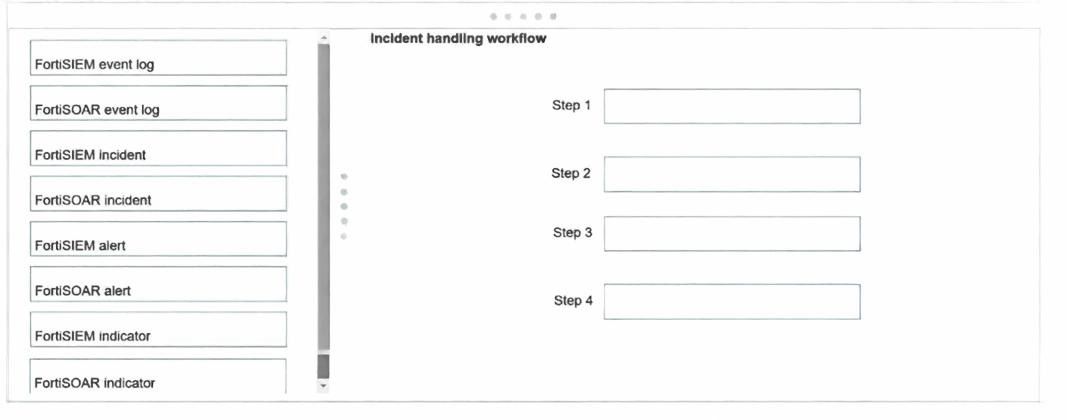
Using the default data ingestion wizard in FortiSOAR, place the incident handling workflow from FortiSIEM
to FortiSOAR in the correct sequence. Select each workflow component in the left column, hold and drag it to
a blank position in the column on the right. Place the four correct workflow components in order, placing the
first step in the first position at the top of the column.
Show answerHide answer
Explanation
Explanation:
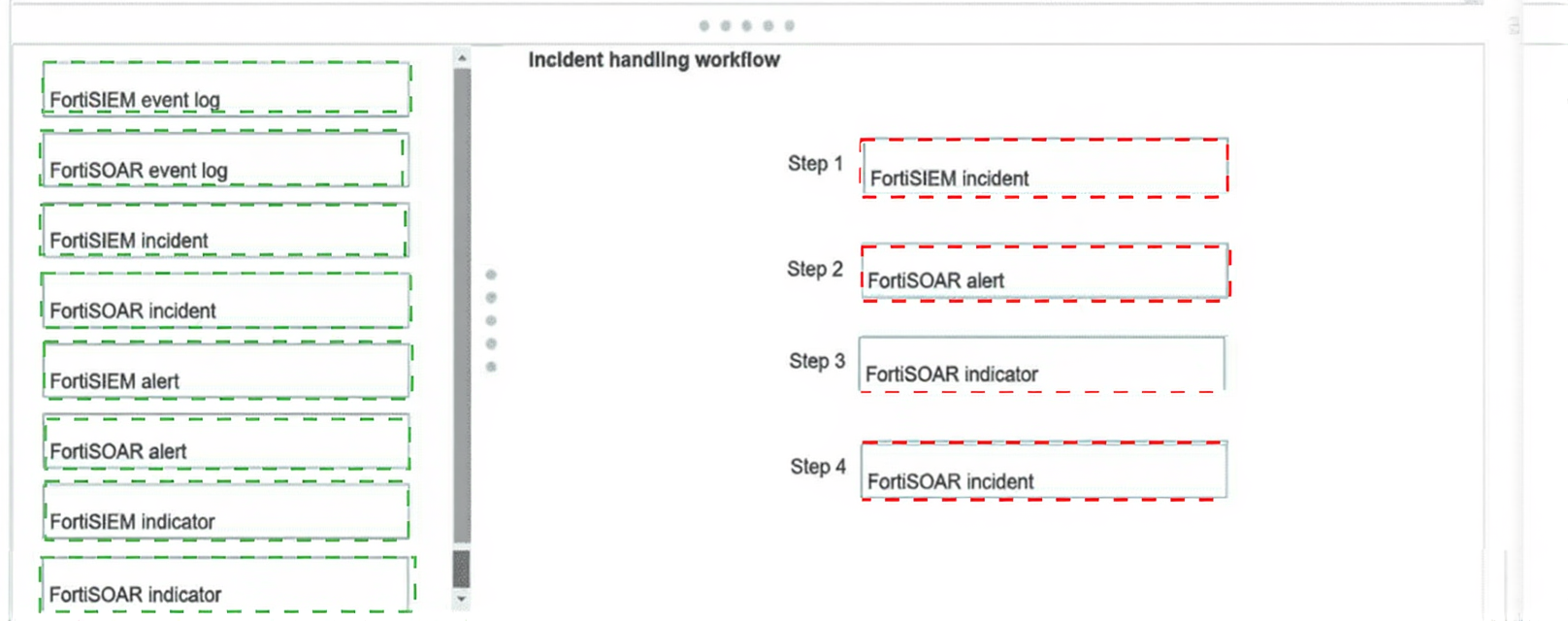
This question tests the default incident handling workflow when ingesting data from FortiSIEM into FortiSOAR using the standard Data Ingestion Wizard. The process follows a logical progression: pulling a security finding from the SIEM, representing it as an alert, extracting relevant artifacts as indicators, and finally escalating confirmed threats into incidents .
✔️ Correct Options:
Step 1 (FortiSIEM incident):
The Data Ingestion Wizard pulls security findings from FortiSIEM. The connector maps native "incidents" in FortiSIEM directly to records in FortiSOAR .
Step 2 (FortiSOAR alert):
Once ingested, the FortiSIEM incident is converted into an alert record in FortiSOAR. This is the first-class object representing a potential security issue .
Step 3 (FortiSOAR indicator):
Upon alert creation, automated playbooks extract observables (like IPs or hashes) from the alert and create indicator records for enrichment and reputation checking .
Step 4 (FortiSOAR incident):
After investigation, if the alert is a true positive, the analyst escalates it. Related alerts are grouped into an incident for formal tracking, SLA management, and response .
❌ Incorrect options:
FortiSIEM alert:
FortiSIEM uses the term "incident" as its primary security finding; "alert" in FortiSIEM is not the primary object ingested by the default wizard .
FortiSOAR event log:
This represents raw, unparsed log data. The workflow starts with structured security findings, not raw logs.
FortiSIEM indicator:
Indicators are extracted within FortiSOAR after ingestion, not before. FortiSIEM does not send pre-packaged indicators in this default workflow.
FortiSIEM event log:
Similar to event log, this is too low-level. The ingestion wizard is designed to pull analyzed incidents, not raw events.
🔧 Reference:
→ Fortinet Documentation: About the connector
Confirms that "incidents" in FortiSIEM are mapped to "alerts" in FortiSOAR during data ingestion.
→ Fortinet Documentation: Streamline
Describes how alerts are escalated into incidents for response.