The spouse of a critically ill patient is indecisive, withdrawn, and tells the nurse, "I feel so
helpless." Appropriate nursing interventions include
Show answerHide answer
Correct answer: Didentifying and reinforcing the spouse's support systems.
Explanation
Explanation: When dealing with a spouse who feels helpless, the most effective nursing
intervention is to identify and reinforce their support systems. This helps the spouse feel
less isolated and more empowered. Offering solutions to problems, encouraging other
family members to make decisions, or providing reassurance that visiting is not necessary
do not directly address the spouse's feelings of helplessness and may even contribute to
feelings of exclusion or inadequacy. References: = CCRN Exam Handbook, AACN Adult
CCRN Certification Review Course
Question 22Choose 1
A patient who experienced a blunt chest trauma in an automobile crash is admitted with
multiple rib fractures. The patient is dyspneic and hypotensive and is reporting left shoulder
pain. On auscultation, a nurse notes that bowel sounds can be heard over the lower left
thorax. These findings are consistent with
Show answerHide answer
Correct answer: Bruptured diaphragm.
Explanation
Explanation: The patient’s findings are consistent with a ruptured diaphragm, which is a
tear in the muscle that separates the chest and abdominal cavities. A blunt chest trauma
can cause a sudden increase in intra-abdominal pressure, which can rupture the
diaphragm and allow abdominal organs to herniate into the thorax. This can cause
dyspnea, hypotension, shoulder pain, and bowel sounds over the lower thorax. A ruptured
abdominal viscus would cause peritonitis, which would present with abdominal pain,
distension, fever, and signs of sepsis. A flail chest would cause paradoxical chest
movement, respiratory distress, and cyanosis. A mediastinal shift would cause tracheal
deviation, decreased breath sounds, and jugular venous distension.
Question 23Choose 1
The purpose of administering a sodium nitroprusside (Nipride) drip after a carotid
endarterectomy is to
Show answerHide answer
Correct answer: Cdecrease MAP and thus prevent hemorrhage at the operative site.
Explanation
Explanation: Sodium nitroprusside (Nipride) is administered after a carotid endarterectomy
to decrease mean arterial pressure (MAP) and reduce the risk of hemorrhage at the
surgical site. By lowering the blood pressure, it minimizes the chance of bleeding while
ensuring adequate cerebral perfusion through careful monitoring. References: = AACN
Handbook for CCRN Certification, pp. 75-78.
Question 24Choose 1
A nurse is caring for a patient who had a gastric bypass procedure 2 days ago. A physician
has ordered a gastric tube to be placed due to increased abdominal distention. The nurse
realizes that this procedure will most likely need to be done
Show answerHide answer
Correct answer: Aunder fluoroscopy.
Explanation
Explanation: After gastric bypass surgery, the altered anatomy of the gastrointestinal tract
makes it challenging to place a gastric tube. Performing the procedure under fluoroscopy
provides real-time imaging guidance, ensuring correct placement and reducing the risk of
complications, such as perforation or misplacement.References: = CCRN Exam Handbook,
page 45
Question 25Choose 1
A patient with unilateral facial droop and slurred speech has a history of hyperlipidemia and
hypertension. The nurse should anticipate an order for a
Show answerHide answer
Correct answer: Chead and neck CT scan.
Explanation
Explanation: Given the symptoms of unilateral facial droop and slurred speech, a stroke is
highly suspected. A head and neck CT scan is the most appropriate initial imaging to quickly evaluate for the presence of an ischemic or hemorrhagic stroke, which is critical for
determining the appropriate treatment plan. An MRI may provide more detailed information
later but is not the initial test of choice in the acute setting. References: = CCRN Exam
Handbook, AACN Adult CCRN Certification Review Course
Question 26Choose 1
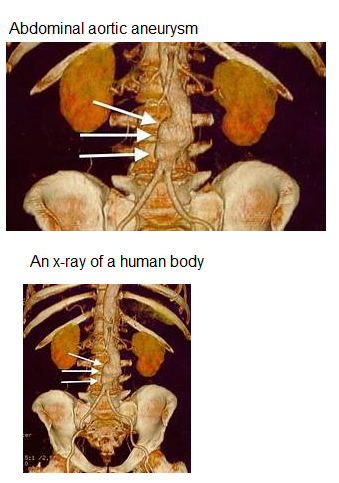
A patient who is post repair of an abdominal aortic aneurysm should be monitored for
which of the following complications?
Show answerHide answer
Correct answer: Aacute renal failure
Explanation
Explanation:
Acute renal failure is one of the possible complications of abdominal aortic aneurysm (AAA)
repair, especially after open surgery. Acute renal failure is a sudden loss of kidney function
that can cause fluid and electrolyte imbalance, acid-base disturbance, and uremic
syndrome. Acute renal failure can occur due to several factors, such as hypoperfusion of
the kidneys, atheroembolism, contrast-induced nephropathy, or ischemia-reperfusion
injury12. The incidence of acute renal failure after AAA repair ranges from 2 to 25%,
depending on the definition, the type of surgery, and the patient’s risk factors13. Acute
renal failure is associated with increased morbidity, mortality, and length of hospital stay
after AAA repair13.
Other complications of AAA repair include bleeding, infection, wound complications, graftrelated
complications, bowel ischemia, spinal cord ischemia, and cardiac, pulmonary, or
neurological events124. Acute hepatic dysfunction, acute CVA, and atrial fibrillation are not
specific complications of AAA repair, but they may occur in any major surgery or in patients
with preexisting conditions.
Question 27Choose 1
An older adult patient is admitted with acute exacerbation of congestive heart failure. An
echocardiogram indicates that EF is unchanged at 50%. The patient is most likely
experiencing
Show answerHide answer
Correct answer: Bheart failure with preserved EF.
Explanation
Explanation: Heart failure with preserved ejection fraction (HFpEF) is a type of heart
failure that occurs when the heart muscle is stiff and does not relax well, causing high
pressure in the heart and lungs. HFpEF is diagnosed when the patient has symptoms and
signs of heart failure and a normal or high ejection fraction (EF), which is the percentage of
blood pumped out of the left ventricle with each heartbeat. HFpEF is usually caused by
conditions that affect the heart or blood vessels, such as aging, high blood pressure,
diabetes, obesity, or kidney disease12
Question 28Choose 1
A patient admitted with a diagnosis of pneumonia has a temperature of 103.2° F (39.5° C)
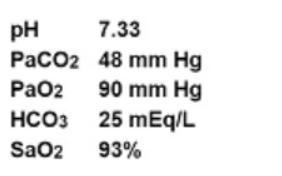
and copious pulmonary secretions. ABG results drawn on room air are:
The nurse should expect that hemoglobin's affinity for oxygen in this patient to be
Show answerHide answer
Correct answer: Ddecreased.
Explanation
Explanation: The patient's ABG results indicate respiratory acidosis (pH 7.33, PaCO2 48
mm Hg) with a slightly elevated temperature (103.2° F). In the context of fever and
acidosis, hemoglobin's affinity for oxygen decreases, a phenomenon described by the Bohr
effect. This means that hemoglobin will release oxygen more readily to the tissues. Factors
like increased temperature and acidosis cause a rightward shift in the oxyhemoglobin
dissociation curve, reducing the affinity of hemoglobin for oxygen.References: = CCRN
Exam Handbook, page 44
Question 29Choose 1
A patient who sustained a C4 fracture requests to be taken off the ventilator 3 days after
the initial injury, indicating, "I can't live hooked to this
machine." The nurse's best response to this patient would be,
Show answerHide answer
Correct answer: A"Do you feel that you will be hooked up to this machine forever?"
Explanation
Explanation: The best response is to assess the patient's feelings and understanding of
their condition and prognosis. This response opens a dialogue and allows the nurse to
provide education and emotional support based on the patient's specific concerns. Other
responses may provide false reassurance or imply assumptions about the patient’s future
without first understanding their current emotional state and concerns. References: AACN
Adult CCRN Certification Review Course, AACN CCRN Exam Handbook.
Question 30Choose 1
A family member asks permission to visit a patient after work at 12:30 AM. On previous
visits, the family member has been disruptive. To address the situation, a nurse should
Show answerHide answer
Correct answer: Dallow the family member to visit after setting behavioral limits.
Explanation
Explanation: While it is important to support family involvement, previous disruptive
behavior necessitates setting clear behavioral limits to ensure a safe and therapeutic
environment for the patient. Allowing the visit with established guidelines helps balance the
need for patient support with maintaining unit order. This approach also respects the
patient's rest and recovery needs. References: = CCRN Exam Handbook, AACN Adult
CCRN Certification Review Course
Full mock exam
Sit the CCRN-Adult exam before exam day
Full-length mocks with the same number of questions and the same time limit as the real CCRN-Adult exam. Every attempt draws a new set of questions from the full bank, so you can keep going until you pass comfortably.