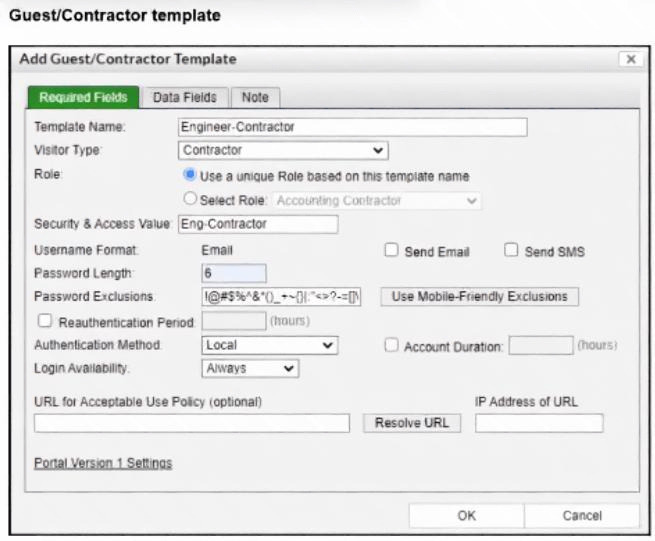
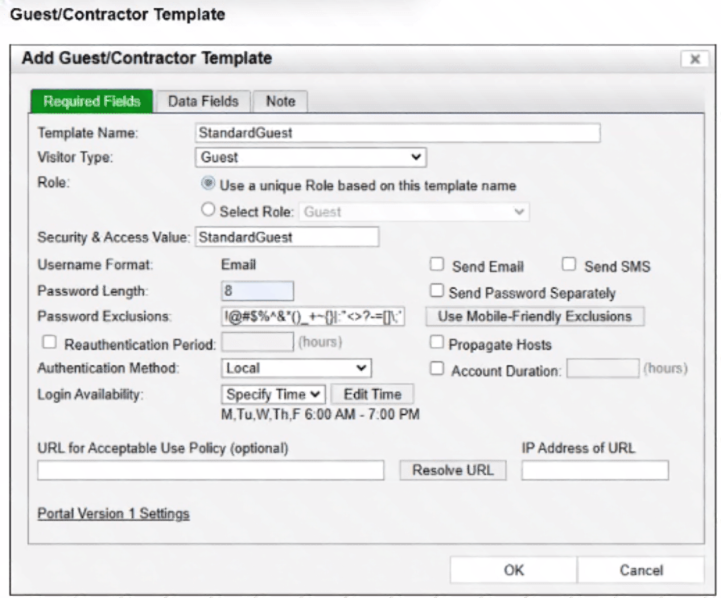
Which two requirements must be met to set up an N+1 HA cluster? (Choose two.)
Show answerHide answer
Correct answer: A, B A FortiNAC-F managerA FortiNAC-F device designated as a secondary
Explanation
Explanation:FortiNAC-F 7.6 introduces N+1 failover, where a single secondary CA can provide redundancy for one or more primary CAs. The failover group is centrally configured and managed by FortiNAC-F Manager (FortiNAC-M).
A. A FortiNAC-F Manager — Correct
FortiNAC-M is required to configure and manage the N+1 Failover Groups. In FortiNAC-F 7.6, CA devices are added to the Manager, and their N+1 roles and relationships are configured under:
System > CA Management
Fortinet describes FortiNAC-M as the component that manages N+1 failover groups and enables N+M high availability for CA appliances.
B. A FortiNAC-F device designated as a secondary — Correct
An N+1 configuration requires a CA to be assigned the Secondary failover role. This standby CA can take over for a failed primary CA.
Fortinet's configuration procedure specifically instructs the administrator to configure the secondary server first, enable N+1 Failover, and select Secondary as its Failover Role.
Why the Other Options Are Incorrect
C. A dedicated VLAN for primary and secondary synchronization — Incorrect
A dedicated synchronization VLAN is not a general requirement for N+1 HA. FortiNAC-F supports different N+1 deployment methods, including independent backup IPs and shared-IP configurations. A dedicated VLAN between primary and secondary nodes is therefore not mandatory.
D. At least two FortiNAC-F devices designated as primary — Incorrect
Fortinet defines an N+1 Failover Group as one secondary server for one or more primary servers. Therefore, multiple primaries are supported, but having at least two primaries is not a strict requirement.
Reference
Fortinet FortiNAC-F 7.6 documentation defines N+1 as a configuration in which FortiNAC-M manages one secondary CA for one or more primary CAs.