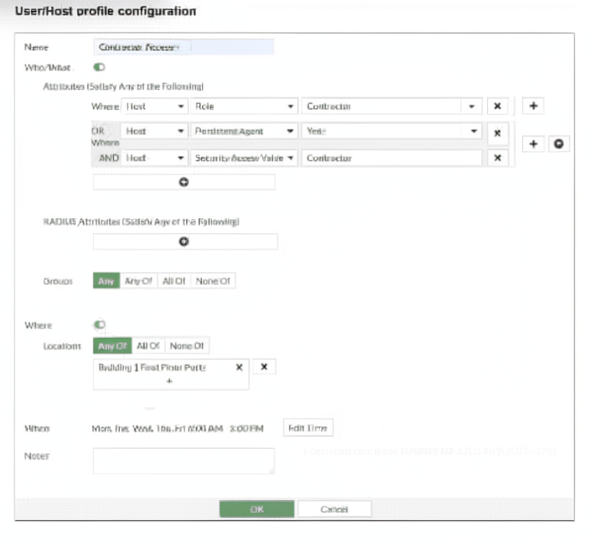
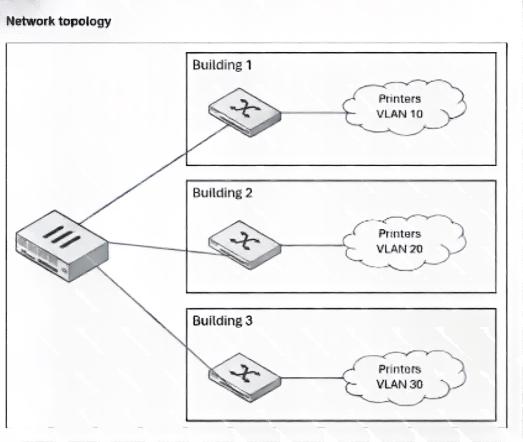
Refer to the exhibit.
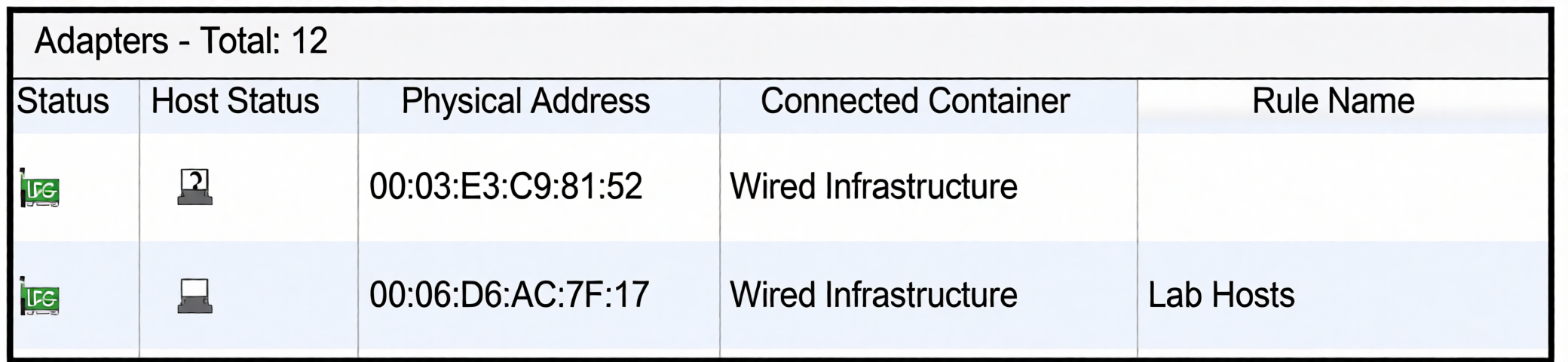
After a successful layer 2 poll, two hosts were learned on the same port The port is a member of the Role- Based Access and Forced Registration groups. The switch has been configured to leverage a single isolation VLAN. How will FortiNAC-F manage this port?
After a successful layer 2 poll, two hosts were learned on the same port The port is a member of the Role- Based Access and Forced Registration groups. The switch has been configured to leverage a single isolation VLAN. How will FortiNAC-F manage this port?
Show answerHide answer
Correct answer: A The port will be provisioned to the isolation network
Explanation
Explanation:FortiNAC-F performs VLAN enforcement at the switch-port level in this scenario. When multiple hosts are learned on the same physical access port, they cannot independently be placed into different VLANs through ordinary port-based VLAN switching.
Because the port belongs to the Forced Registration group, an unregistered/rogue host connected to that port triggers registration enforcement. Fortinet states that ports in this group place unregistered devices into the Registration/Isolation VLAN until they are registered.
Since the switch is configured to use a single isolation VLAN, the port itself is moved to that isolation network. Consequently, both hosts behind that physical port are affected by the VLAN assignment.
Why the Other Options Are Incorrect
B. The port will be provisioned for the normal state host, but the second host will have access to only the isolation portal page — Incorrect
With ordinary port-based VLAN enforcement, FortiNAC-F cannot assign one host on the physical port to the production VLAN while keeping another host on that same port in the isolation VLAN. The VLAN change applies to the port.
C. The port will be provisioned as an uplink to a hub or unmanaged switch — Incorrect
Learning two MAC addresses on a port does not automatically cause FortiNAC-F to convert that port into an uplink. FortiNAC-F can recognize multiple hosts on one port, but that condition by itself does not make it an infrastructure uplink.
D. The port will be added to the Access Point Management group — Incorrect
Access Point Management relates to recognized wireless access-point infrastructure. Simply discovering multiple hosts on a wired switch port does not cause the port to be placed in that group.
Reference
Fortinet FortiNAC-F documentation states that:
Forced Registration causes unregistered hosts on participating ports to be placed into the Registration VLAN.
FortiNAC-F can use a single isolation VLAN for restricted states such as unknown/unregistered hosts.