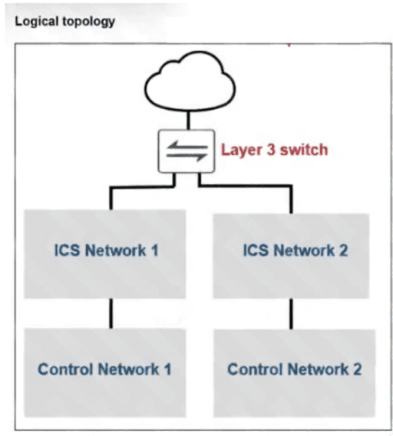
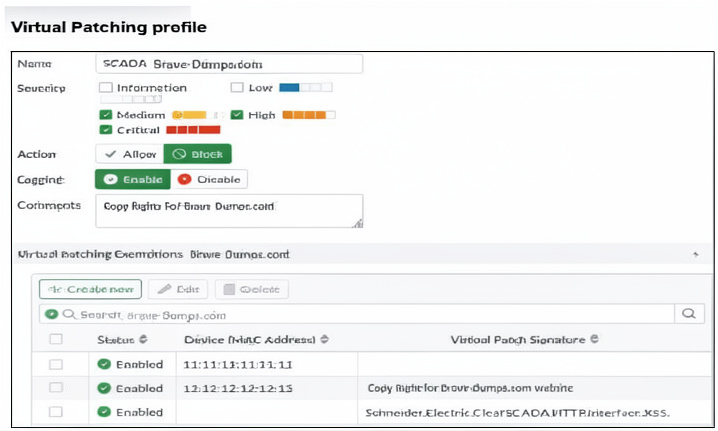
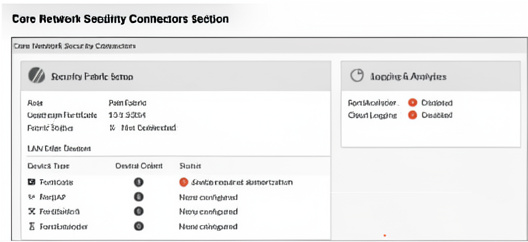
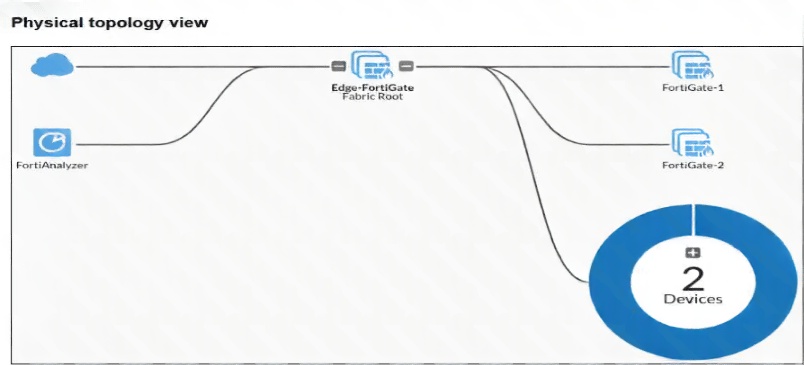
Refer to the exhibit.
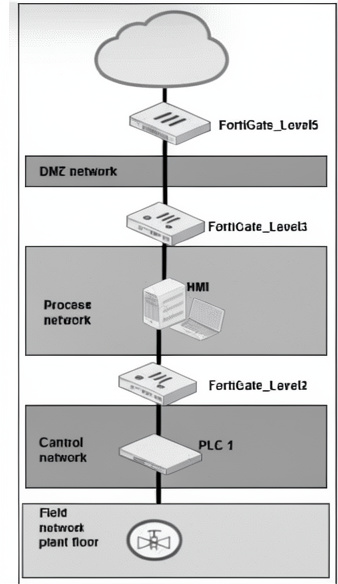
A simplified OT network is shown. You want to optimize the protection of this OT network. Which two controls must you implement? (Choose two answers)
A simplified OT network is shown. You want to optimize the protection of this OT network. Which two controls must you implement? (Choose two answers)
Show answerHide answer
Correct answer: B, C IPS on FortiGate_Level5.Virtual patching on FortiGate_Level2.
Explanation
Explanation:The OT network shows multiple levels. IPS on FortiGate_Level5 (connecting to DMZ/Process network) protects against external threats entering the OT zone. Virtual patching on FortiGate_Level2 (protecting Control network and PLCs) shields vulnerable OT devices (PLCs, HMIs) from exploits without requiring firmware updates.
Correct Options:
B. IPS on FortiGate_Level5.
FortiGate_Level5 is positioned between the Process network and DMZ, likely facing less trusted zones. Intrusion Prevention System (IPS) at this level detects and blocks known attacks, exploits, and reconnaissance attempts targeting OT protocols and services.
C. Virtual patching on FortiGate_Level2.
FortiGate_Level2 sits between the Control network (containing PLCs) and upper levels. Virtual patching protects vulnerable OT devices by blocking exploit attempts based on vulnerability signatures, without patching the devices themselves. This is ideal for PLCs that cannot be easily updated.
Incorrect Options:
A. Offline IDS on FortiGate_Level3.
Offline IDS (passive monitoring) does not actively block threats. For optimization, inline IPS or virtual patching is preferred. Level3 between HMI and Process network would benefit from active protection, not offline.
D. OT signature on FortiGate_Level5.
OT signatures are typically enabled within Application Control or IPS profiles. "OT signature" alone is not a control; it is a component of other features. IPS already includes OT signatures. Virtual patching and IPS are the recommended controls at their respective levels.
Reference:
Fortinet NSE6_EDR_AD-7.0 Study Guide, "OT Network Protection with IPS and Virtual Patching"; FortiGate OT Security Guide, "Layered Defense for Purdue Model."