CompTIA certification · Exam CS0-003

CS0-003 Mock Exam Page 10

CompTIA CySA+

Free CS0-003 mock exam questions 91–100, each with the answer and an explanation.

20 questions · 39 minutes · free, no sign-up

Free CS0-003 questions

91–100 of 151 free
Question 91 Choose 2
While a security analyst for an organization was reviewing logs from web servers. the analyst found several successful attempts to downgrade HTTPS sessions to use cipher modes of operation susceptible to padding oracle attacks. Which of the following combinations of configuration changes should the organization make to remediate this issue? (Select two).
Show answerHide answer

Correct answer: A, B Configure the server to prefer TLS 1.3.Remove cipher suites that use CBC.

Explanation

Correct Answer:

1. Configure the server to prefer TLS 1.3

TLS 1.3 removes support for older, insecure cipher suites, including those that are vulnerable to padding oracle attacks It also removes static RSA and Diffie-Hellman key exchanges, further improving security.

TLS 1.3 enforces stronger forward secrecy and eliminates insecure features like renegotiation.

Upgrading to TLS 1.3 helps mitigate downgrade attacks and ensures only modern, secure algorithms are used.

Why it matters: Padding oracle attacks exploit weaknesses in how CBC (Cipher Block Chaining) padding is validated. TLS 1.3 doesn’t support CBC, so it avoids the vulnerability altogether.

2. Remove cipher suites that use CBC

CBC (Cipher Block Chaining) modes are susceptible to padding oracle attacks, such as BEAST, POODLE, and Lucky13.

Removing CBC-based ciphers ensures the server won’t offer insecure options that clients can be tricked into using.

Instead, you should use AEAD cipher modes like GCM (Galois/Counter Mode), which are not vulnerable to padding attacks.

Why it matters: Even if TLS 1.2 is in use, removing CBC suites reduces the attack surface and mitigates vulnerabilities in older protocol versions.

Incorrect Answer:

Configure the server to prefer ephemeral modes for key exchange

This is related to forward secrecy, not padding oracle vulnerabilities.

While good for security, it does not directly mitigate padding oracle attacks.

Ephemeral key exchange protects past sessions in case of key compromise—not relevant to the padding issues in CBC.

Require client browsers to present a user certificate for mutual authentication

This is about client authentication, not cipher selection or encryption mode.

Mutual TLS (mTLS) increases security but doesn't prevent padding oracle or downgrade attacks.

Also, it adds complexity and is rarely used for public-facing web servers.

Configure the server to require HSTS

HSTS (HTTP Strict Transport Security) ensures browsers use HTTPS, preventing SSL stripping.

It does not affect the choice of cipher suites or TLS version used.

HSTS improves overall transport security but doesn’t mitigate padding oracle vulnerabilities.

References:

OWASP: Padding Oracle Attacks

NIST SP 800-52 Rev. 2: Guidelines for the Selection, Configuration, and Use of TLS

RFC 8446: TLS 1.3 Specification
Question 92 Choose 1
Which of the following is the appropriate phase in the incident response process to perform a vulnerability scan to determine the effectiveness of corrective actions?
Show answerHide answer

Correct answer: C Recovery

Explanation

Correct Answer:

Recovery Phase:

The Recovery phase of the incident response process is where systems and operations are brought back to a fully functional state after containment and eradication. It’s during this phase that a vulnerability scan should be conducted to ensure that:

All known vulnerabilities or exploited weaknesses have been effectively remediate

d No remaining backdoors, malware, or misconfigurations exist

The system is safe to return to production

A post-remediation scan provides assurance that the corrective actions taken (patches, configurations, etc.) are effective and no additional vulnerabilities are present before restoring normal operations.

Key reason: Performing the scan during recovery helps validate that the environment is secure before resuming full operations, minimizing the risk of reinfection or repeated compromise.

Incorrect Answer Explanations:

Lessons Learned:

This is the final phase after the incident has been fully handled.

It involves reviewing what went well, what failed, and how to improve processes going forward.

No technical actions like scanning are typically performed here—just documentation and analysis.

Reporting:

Reporting involves documenting findings, impact, indicators of compromise (IOCs), and outcomes for internal and possibly external stakeholders.

It’s focused on communication and record-keeping, not technical validation of remediations.

Root Cause Analysis:

This phase aims to determine how and why the incident occurred, identifying the initial vector of compromise.

It is performed before recovery, typically during containment or eradication, and focuses on forensic analysis—not verifying fixes.

References:

NIST SP 800-61 Rev. 2 – Computer Security Incident Handling Guide
See Section 3.2: Recovery – includes validation and system monitoring.
CompTIA CySA+ (CS0-003) Objectives
Domain 4.3: Apply the appropriate incident response procedure or tool
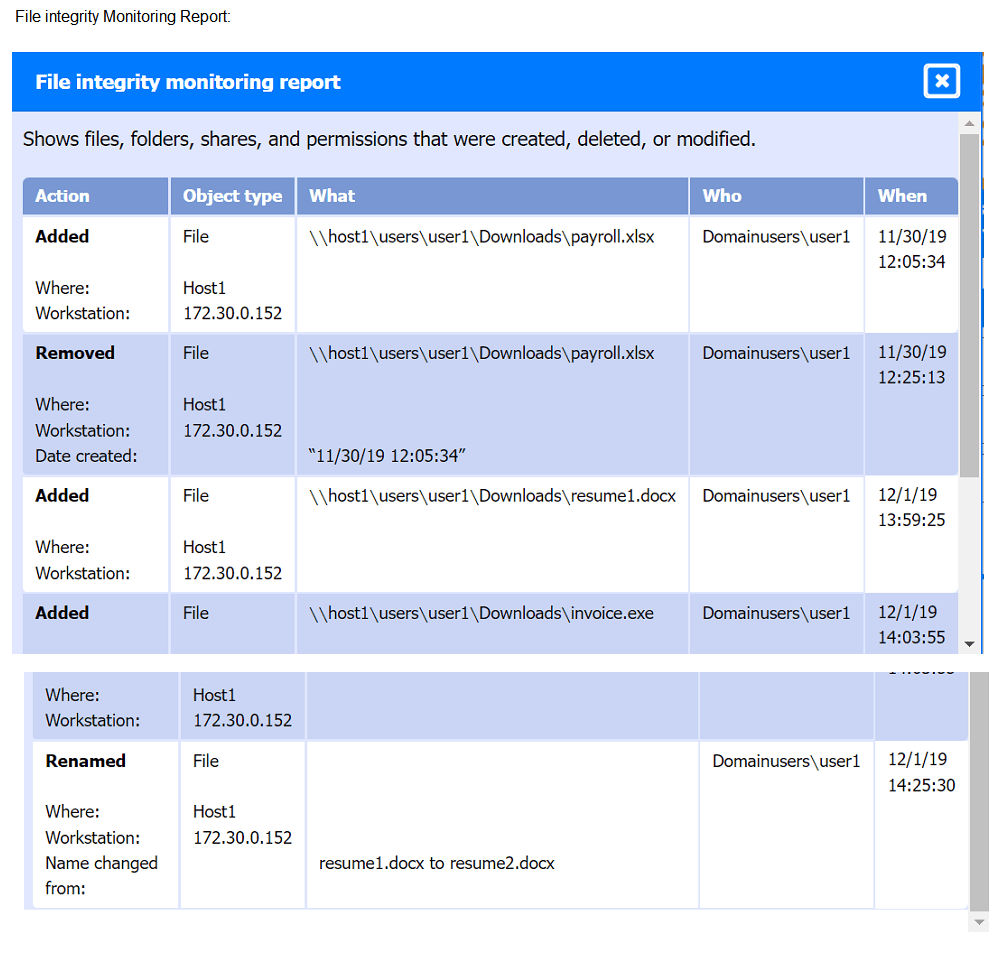
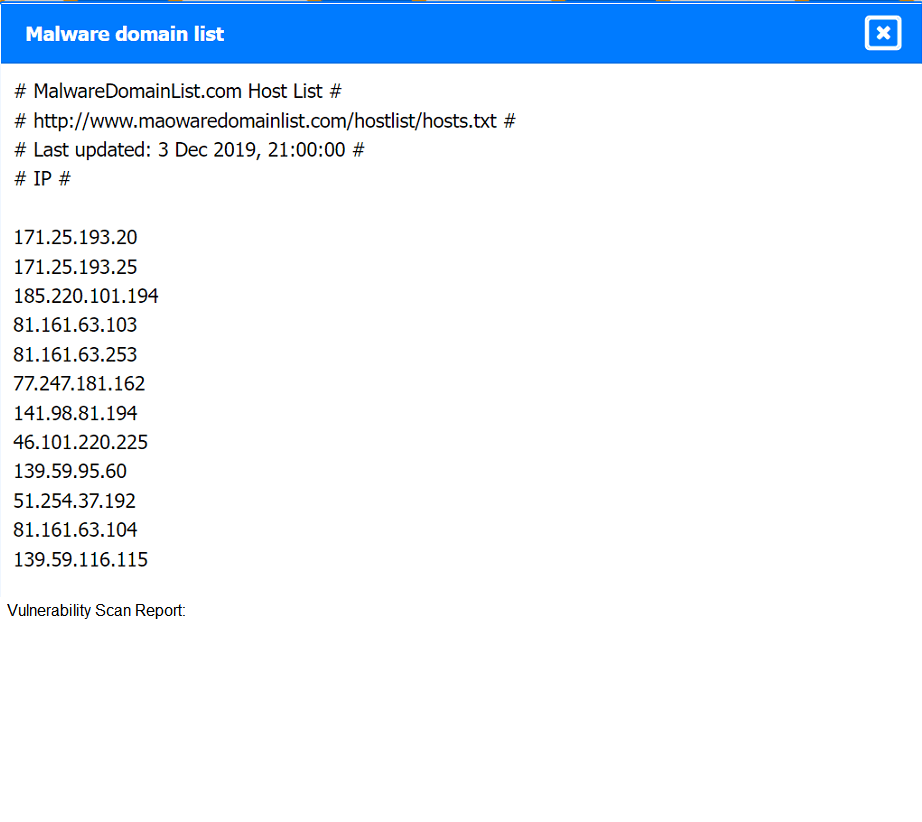
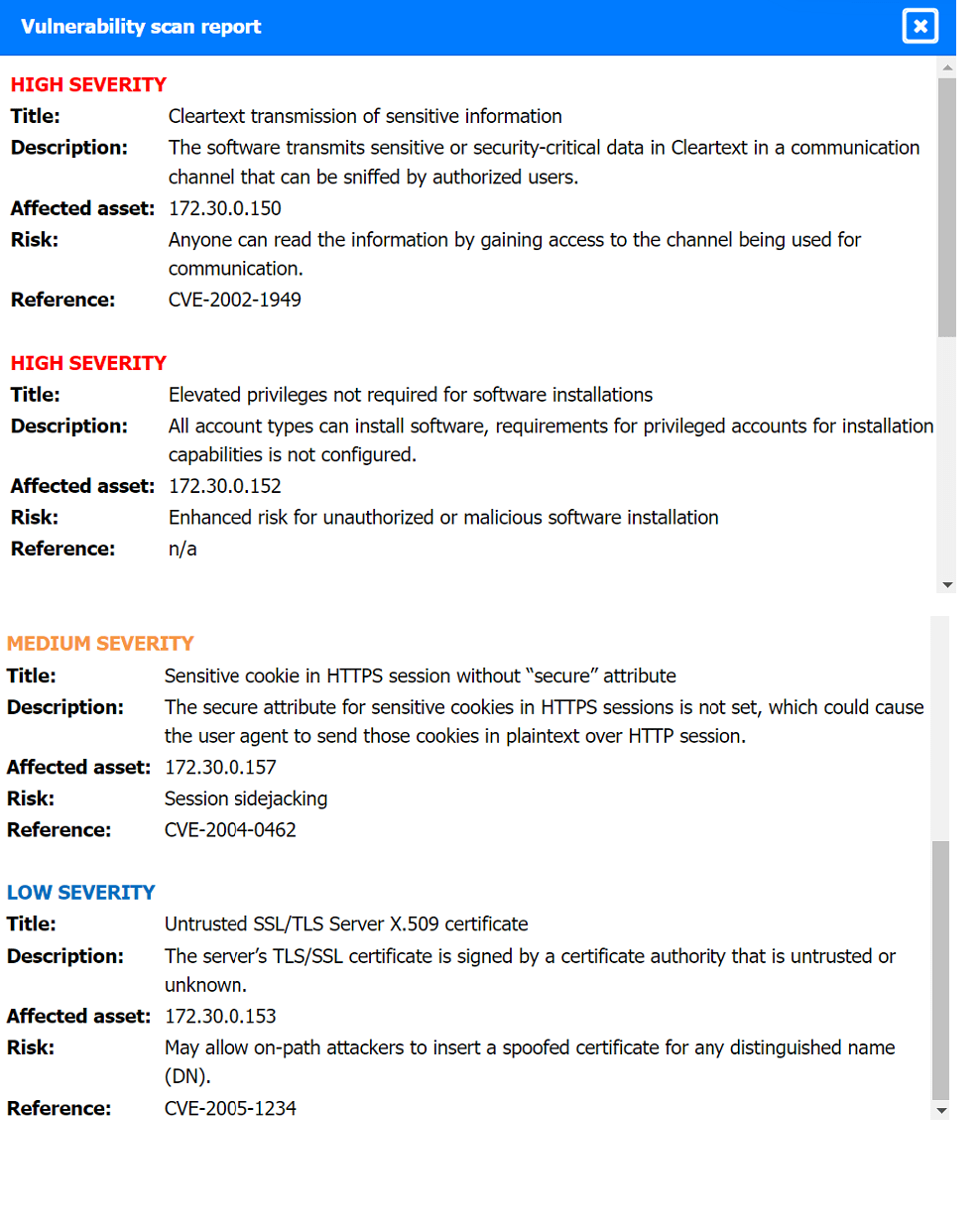
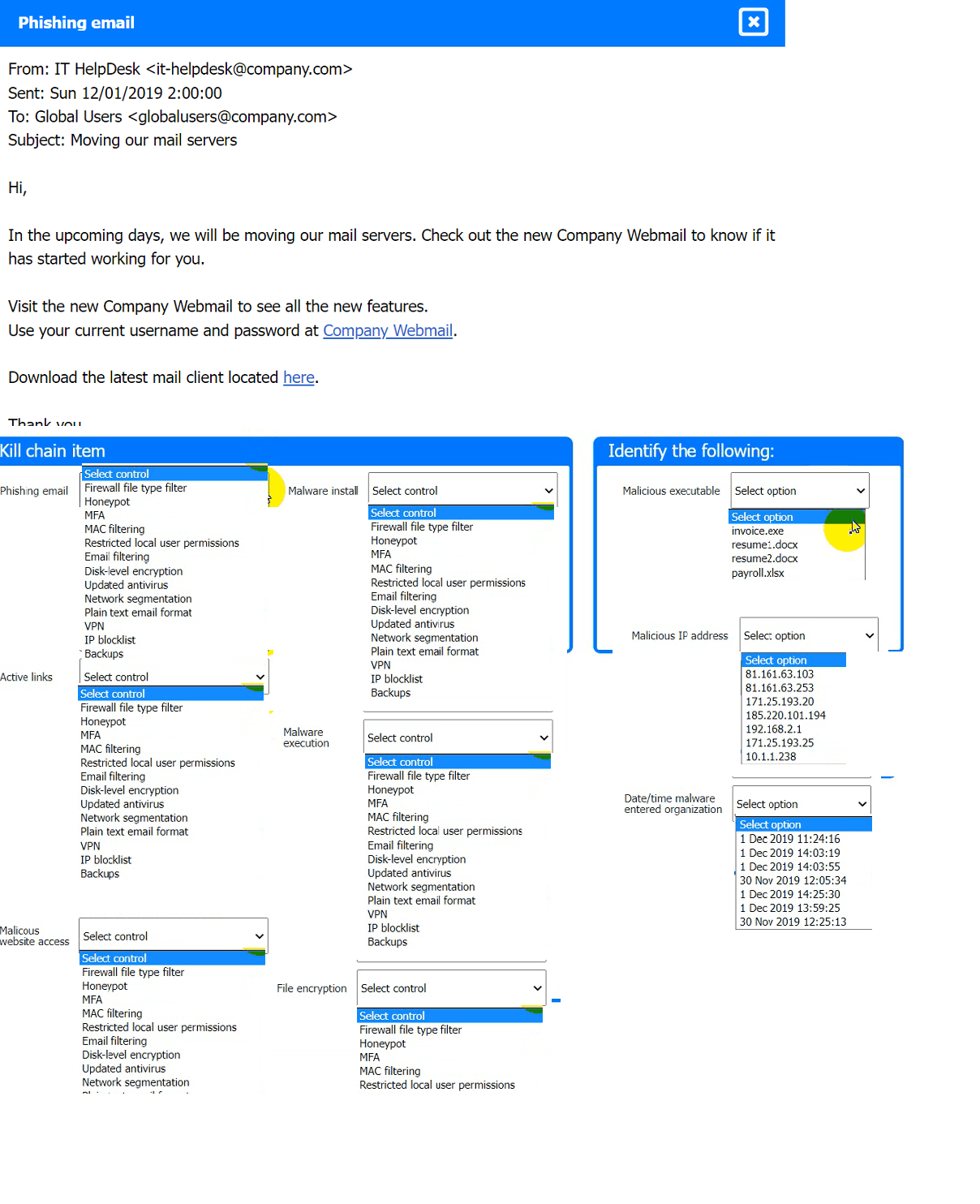
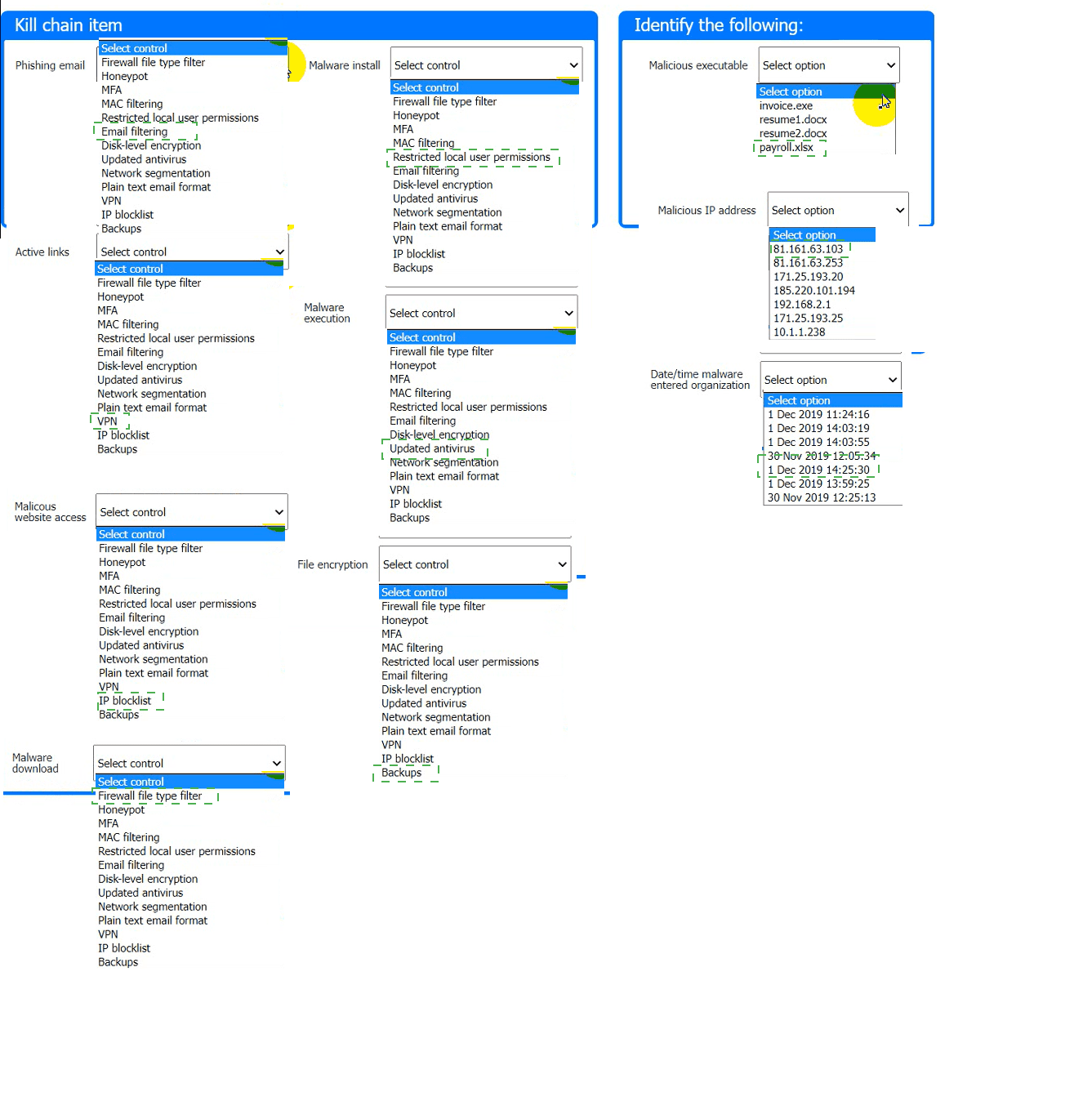
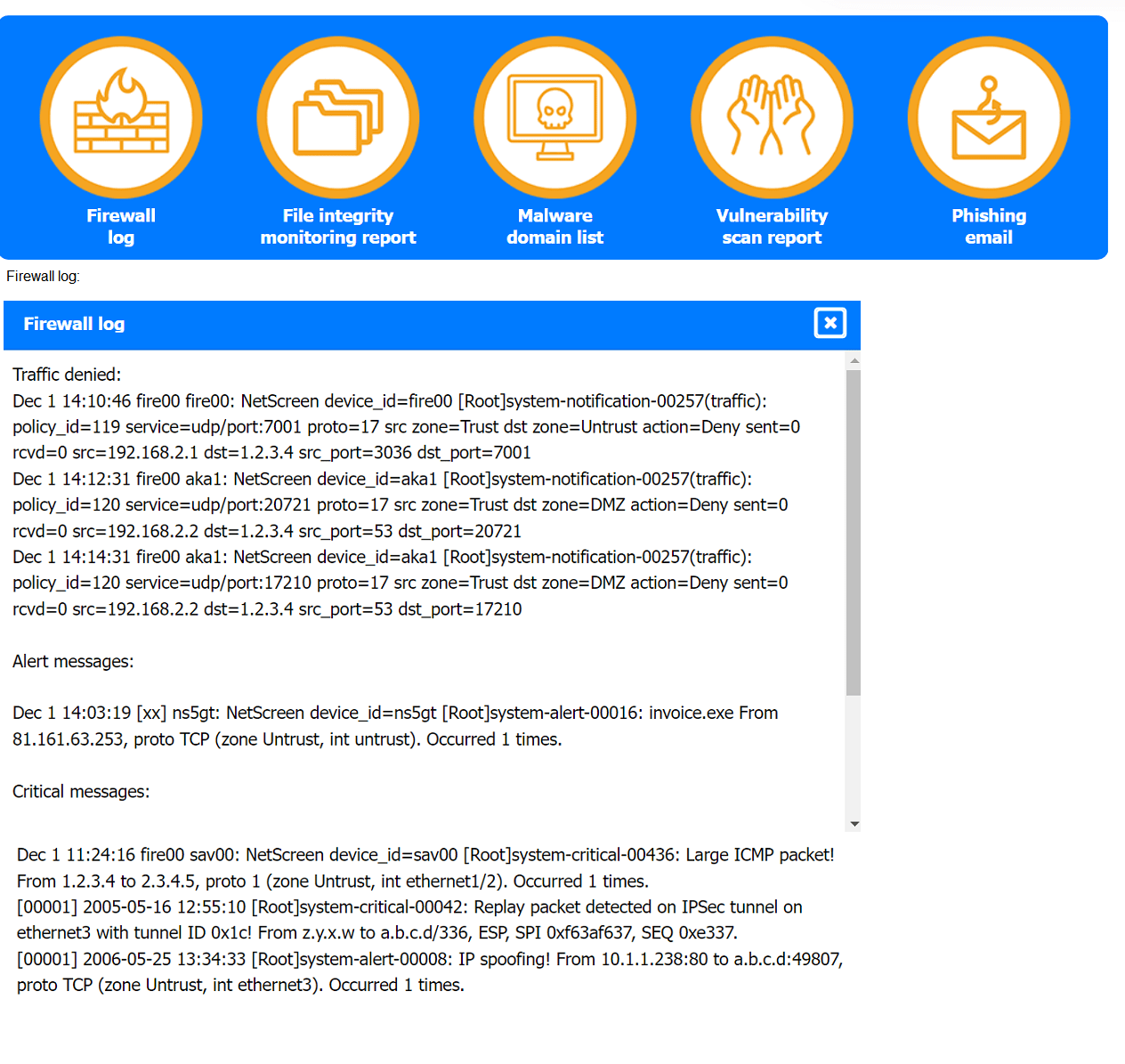
Question 93


Show answerHide answer

Explanation

Question 94 Choose 1
An analyst has received an IPS event notification from the SIEM stating an IP address, which is known to be malicious, has attempted to exploit a zero-day vulnerability on several web servers. The exploit contained the following snippet:

/wp-json/trx_addons/V2/get/sc_layout?sc=wp_insert_user&role=administrator

Which of the following controls would work best to mitigate the attack represented by this snippet?
Show answerHide answer

Correct answer: A Limit user creation to administrators only.

Explanation

Explanation:

The question is part of the Security Operations domain (33% weighting) of the CompTIA CySA+ (CS0-003) exam, aligning with Objective 1.3 (Analyze indicators of potentially malicious activity) and Objective 1.5 (Recommend process improvements to security operations). The scenario involves an Intrusion Prevention System (IPS) event notification in a Security Information and Event Management (SIEM) system, indicating a malicious IP attempting to exploit a zero-day vulnerability on web servers using the URL snippet /wp-json/trx_addons/v2/get/sc_layout?sc=wp_insert_user&role=administrator. This suggests an attempt to create an unauthorized administrator account via a WordPress plugin (trx_addons). The correct control must mitigate this specific attack, focusing on preventing unauthorized user creation, per CS0-003’s emphasis on mitigating exploits and NIST SP 800-53 guidelines.

Correct Answer:

Limit user creation to administrators only.
Limiting user creation to administrators only is the best control to mitigate the attack represented by the snippet /wp-json/trx_addons/v2/get/sc_layout?sc=wp_insert_user&role=administrator. The snippet attempts to exploit a zero-day vulnerability in the trx_addons WordPress plugin, specifically targeting the wp_insert_user function to create an administrator account. By restricting user creation (e.g., via WordPress settings or server-side controls) to only authorized administrators, the attack is blocked, as unauthorized attempts to invoke wp_insert_user will fail. This aligns with CS0-003 Objective 1.5, emphasizing process improvements to secure systems, and NIST SP 800-53 (AC-6), which advocates least privilege to prevent unauthorized access. For example, configuring WordPress to require admin authentication for user creation stops the exploit, regardless of the vulnerability’s specifics.

Incorrect Answers:

1)Limit layout creation to administrators only.
Limiting layout creation to administrators restricts access to the sc_layout parameter in the snippet, which relates to the trx_addons plugin’s layout functionality. However, the attack’s primary goal is to exploit the wp_insert_user function to create an administrator account, not to manipulate layouts. Restricting layout creation does not address the user creation vulnerability, allowing the exploit to succeed. For CS0-003 Objective 1.3, analyzing the snippet shows the attack targets user management, not layout functions. NIST SP 800-53 (AC-6) emphasizes controls specific to the threat, making user creation restrictions more effective than layout restrictions for this zero-day exploit.

2)Set the directory trx_addons to read only for all users.
Setting the trx_addons directory to read-only for all users could prevent modifications to the plugin’s files, such as unauthorized code injection. However, the snippet targets a web-based API endpoint (/wp-json/trx_addons/v2/get), not direct file system modifications. The zero-day exploit likely leverages a flaw in the plugin’s code execution, which read-only permissions on the directory won’t block, as the API processes requests dynamically. For CS0-003 Objective 1.5, file system permissions are relevant but not specific to this web-based attack. NIST SP 800-53 (SC-7) suggests application-level controls, like restricting user creation, are more effective than file permissions here.

3)Set the directory v2 to read only for all users.
Setting the v2 directory to read-only aims to restrict access to the API version path in the snippet (/wp-json/trx_addons/v2). However, this does not prevent the exploit, as the attack targets a vulnerability in the trx_addons plugin’s API processing (wp_insert_user), not file modifications in the v2 directory. Read-only settings on the directory won’t stop the API from executing malicious requests. For CS0-003 Objective 1.3, the snippet indicates a functional exploit, not a file write issue. NIST SP 800-53 (AC-6) prioritizes application-level controls, like limiting user creation, over directory permissions for this type of attack.

References:

CompTIA CySA+ (CS0-003) Exam Objectives: Domain 1 (Security Operations), Objective 1.3 (Analyze indicators of potentially malicious activity) and Objective 1.5 (Recommend process improvements to security operations).

NIST SP 800-53: Security and Privacy Controls for Information Systems and Organizations, AC-6 (Least Privilege) and SC-7 (Boundary Protection).

Sybex CompTIA CySA+ Study Guide: Exam CS0-003 by Mike Chapple and David Seidl: Covers analyzing exploits and mitigation strategies.

Udemy: CompTIA CySA+ (CS0-003) Complete Course by Jason Dion: Discusses WordPress vulnerabilities and access control mitigations.

OWASP: Resources on securing WordPress plugins and APIs against unauthorized access.

Additional Notes:

Zero-Day Exploits: These are unpatched vulnerabilities, requiring immediate mitigation focused on the exploit’s impact (e.g., unauthorized user creation). CS0-003 tests this in PBQs involving log or snippet analysis.

WordPress Security: The wp-json API is a common attack vector. Restricting sensitive functions like wp_insert_user is a key defense, often tested in CS0-003 scenarios.

SIEM and IPS: The scenario highlights SIEM/IPS integration for detecting exploits, emphasizing the need to analyze IoCs (e.g., malicious IPs, URL patterns)
Question 95 Choose 1
A security administrator has been notified by the IT operations department that some vulnerability reports contain an incomplete list of findings. Which of the following methods should be used to resolve this issue?
Show answerHide answer

Correct answer: A Credentialed scan

Explanation

Correct Answer:

Credentialed Scan:

A credentialed scan uses valid credentials (such as SSH or Windows admin accounts) to log into systems and perform a deeper, more accurate assessment of vulnerabilities.

In this scenario, the vulnerability reports are incomplete, which strongly suggests that the current scans are non-credentialed (external or limited internal views), and therefore cannot access detailed system information like:

Installed patches

Software versions

Registry values (Windows)

Running services and configurations

By using credentialed scans, the scanner gains insider access—just like an administrator would—and can thoroughly evaluate the system. This results in more comprehensive findings in reports.

Use case: Ensures that the vulnerability scan has visibility into areas that require elevated access—eliminating blind spots that may lead to incomplete results.

Incorrect Answer:

External Scan:
Conducted outside the network (e.g., from the internet).

Only detects externally exposed vulnerabilities, such as open ports and outdated web servers.

Cannot detect internal misconfigurations or patch statuses.

Will result in limited findings compared to internal or credentialed scans.

Differential Scan:
Compares new scan results to previous results to show what changed.

Doesn’t increase scan depth or accuracy—it just highlights deltas.

If the base scan was incomplete, the differential scan will also be incomplete.

Network Scan:
A broad term that typically refers to scanning the network for hosts, open ports, and services.

It is not inherently credentialed and usually lacks depth regarding host-level vulnerabilities.

May identify devices and surface-level issues but miss internal vulnerabilities.

References:
NIST SP 800-115 – Technical Guide to Information Security Testing and Assessment See sections on credentialed vs non-credentialed scanning.

CompTIA CySA+ CS0-003 Exam Objective 2.3:

"Given a scenario, analyze output from security technologies including vulnerability scans..."
Question 96 Choose 1
A recent vulnerability scan resulted in an abnormally large number of critical and high findings that require patching. The SLA requires that the findings be remediated within a specific amount of time. Which of the following is the best approach to ensure all vulnerabilities are patched in accordance with the SLA?
Show answerHide answer

Correct answer: A Integrate an IT service delivery ticketing system to track remediation and closure.

Explanation

Explanation :

The question is part of the Vulnerability Management domain (30% weighting) of the CompTIA CySA+ (CS0-003) exam, aligning with Objective 2.2 (Given a scenario, analyze output from vulnerability assessment tools) and Objective 2.3 (Given a scenario, prioritize vulnerabilities). The scenario describes a vulnerability scan revealing numerous critical and high findings that must be patched within a Service Level Agreement (SLA) timeframe. The goal is to identify the best approach to ensure timely remediation. The correct answer must focus on efficient, scalable, and trackable patch management, per CS0-003’s emphasis on vulnerability prioritization and NIST SP 800-53 (RA-5) guidelines.

Correct Answer:

Integrate an IT service delivery ticketing system to track remediation and closure.
Integrating an IT service delivery ticketing system is the best approach to ensure all vulnerabilities are patched within the SLA timeframe. A ticketing system (e.g., ServiceNow, Jira) assigns, tracks, and prioritizes remediation tasks, ensuring accountability and visibility. For example, critical and high findings can be assigned to IT teams with deadlines, and the system logs completion status, providing auditable evidence of compliance. This scalable solution handles large volumes of findings efficiently, automates workflows, and monitors progress, aligning with CS0-003 Objective 2.3 for prioritizing and remediating vulnerabilities. NIST SP 800-53 (RA-5) emphasizes structured processes for vulnerability management, making ticketing systems ideal for meeting SLA requirements while ensuring no patches are missed.

Incorrect Answers:

1)Create a compensating control item until the system can be fully patched.
Creating compensating controls, such as firewall rules or network segmentation, mitigates risk temporarily when immediate patching isn’t feasible. However, this does not ensure vulnerabilities are patched within the SLA, as it delays remediation rather than addressing it directly. For example, a compensating control might block exploit attempts but leaves systems vulnerable until patched. For CS0-003 Objective 2.3, compensating controls are a secondary measure when patching is delayed, not a primary solution for SLA compliance. NIST SP 800-53 (RA-5) prioritizes timely patching over temporary mitigations, making a ticketing system more effective for ensuring SLA adherence.

2)Accept the risk and decommission current assets as end of life.
Accepting the risk and decommissioning assets as end-of-life avoids patching by retiring vulnerable systems. However, this is impractical for a large number of critical and high findings, as decommissioning functional assets disrupts operations and may not be feasible within the SLA timeframe. It also fails to address vulnerabilities on active systems. For CS0-003 Objective 2.3, risk acceptance is a last resort, not a proactive remediation strategy. NIST SP 800-53 (RA-5) emphasizes patching to reduce risk, making a ticketing system the better choice for tracking and ensuring timely remediation across all affected systems.

3)Request an exception and manually patch each system.
Requesting an exception defers SLA compliance, which doesn’t ensure timely patching and may violate organizational policies. Manually patching each system is inefficient for a large number of findings, risking missed deadlines and human error. For example, manual patching lacks centralized tracking, making it hard to verify completion within the SLA. For CS0-003 Objective 2.3, manual processes are error-prone and unscalable compared to automated tracking. NIST SP 800-53 (RA-5) recommends systematic approaches like ticketing systems to manage remediation, ensuring efficiency and accountability, unlike the slow and unreliable manual patching process.

References:

CompTIA CySA+ (CS0-003) Exam Objectives: Domain 2 (Vulnerability Management), Objective 2.2 (Given a scenario, analyze output from vulnerability assessment tools) and Objective 2.3 (Given a scenario, prioritize vulnerabilities).

NIST SP 800-53: Security and Privacy Controls for Information Systems and Organizations, RA-5 (Vulnerability Monitoring and Scanning).

Sybex CompTIA CySA+ Study Guide: Exam CS0-003 by Mike Chapple and David Seidl: Covers vulnerability management and ticketing systems.

Udemy: CompTIA CySA+ (CS0-003) Complete Course by Jason Dion: Discusses patch management and SLA compliance.

SANS Institute: Resources on vulnerability remediation workflows and ticketing systems.

Additional Notes:

Patch Management: CS0-003 tests prioritizing and tracking remediation, often in PBQs involving vulnerability scan reports and SLA deadlines.

Ticketing Systems: Tools like ServiceNow automate task assignment and tracking, critical for managing large-scale remediation efforts.

SLA Compliance: Audits require evidence of timely patching, making systematic tracking via ticketing systems essential, as per NIST SP 800-53.
Question 97 Choose 1
K company has recently experienced a security breach via a public-facing service. Analysis of the event on the server was traced back to the following piece of code:

SELECT ’ From userjdata WHERE Username = 0 and userid8 1 or 1=1;—

Which of the following controls would be best to implement?
Show answerHide answer

Correct answer: D Validate user input.

Explanation

Explanation:

The code snippet provided is a classic example of a SQL injection attack, where an attacker manipulates a SQL query to bypass authentication or extract sensitive data. The use of OR 1=1 is a well-known technique to force the query to return all records, regardless of the intended logic. CompTIA’s CySA+ CS0-003 exam highlights input validation as a primary defense against such attacks.

Correct Answer:

Validate user input:
Validating user input is the most effective control to mitigate SQL injection attacks. This involves ensuring that all data entered by users is properly sanitized and conforms to expected formats before being processed by the application.

Techniques include:
Using parameterized queries or prepared statements to separate SQL logic from user input.

Escaping special characters that could alter SQL syntax.

Implementing whitelisting to allow only known-good input values.

Rejecting or sanitizing unexpected input types or patterns.

CompTIA emphasizes input validation as a foundational security control in secure coding practices. It prevents attackers from injecting malicious SQL code and helps maintain the integrity and confidentiality of the database.

Incorrect Answer:

Deploy a wireless application protocol
Wireless Application Protocol (WAP) is unrelated to SQL injection mitigation. It’s a communication protocol used for mobile devices accessing internet services. Deploying WAP does not affect how web applications handle database queries or user input. CompTIA does not associate WAP with web application security controls.

Remove the end-of-life component:
While removing outdated or unsupported components is a good security practice, it does not directly address the SQL injection vulnerability shown in the code. The exploit is due to poor input handling, not obsolete software. CompTIA recommends removing end-of-life components to reduce exposure to unpatched vulnerabilities, but this is not the best control for this specific scenario.

Implement proper access control:
Access control governs who can access what resources, but it does not prevent SQL injection. Even with strict access permissions, a vulnerable query can be exploited if input is not validated. CompTIA distinguishes between authorization controls and input validation, and in this case, the latter is the appropriate defense.

Reference:

CompTIA CySA+ CS0-003 Official Study Guide

CompTIA CySA+ CS0-003 Exam Objectives – Domain 2.1: Apply secure coding practices

CompTIA CertMaster Learn for CySA+ CS0-003
Question 98 Choose 1
A Chief Information Security Officer (CISO) has determined through lessons learned and an associated after-action report that staff members who use legacy applications do not adequately understand how to differentiate between non-malicious emails and phishing emails. Which of the following should the CISO include in an action plan to remediate this issue?
Show answerHide answer

Correct answer: A Awareness training and education

Explanation

Explanation:

The question falls within the Reporting and Communication domain (17% weighting) of the CompTIA CySA+ (CS0-003) exam, aligning with Objective 4.1 (Given a scenario, produce a report to communicate security information to stakeholders) and touches on Security Operations (Objective 1.5: Recommend process improvements to security operations). The scenario describes a CISO using lessons learned from an after-action report, identifying that staff using legacy applications struggle to differentiate between non-malicious and phishing emails. The action plan must address this human-related vulnerability to improve security posture. The correct answer should focus on mitigating phishing risks through staff behavior, per CS0-003’s emphasis on post-incident remediation and NIST SP 800-53 guidelines.

Correct Answer:

Awareness training and education
Awareness training and education is the best action for the CISO to include in the action plan to remediate staff members’ inability to differentiate between non-malicious and phishing emails. Phishing exploits human vulnerabilities, often tricking users into clicking malicious links or sharing credentials. Training programs teach employees to recognize phishing indicators, such as suspicious sender addresses or urgent language, reducing the likelihood of successful attacks. For example, regular simulations and education on email security best practices can improve staff vigilance, even with legacy applications. This aligns with CS0-003 Objective 1.5, emphasizing process improvements, and NIST SP 800-53 (AT-2), which mandates security awareness training to address insider threats. Training directly targets the identified issue, enhancing user behavior and security posture.

Incorrect Answers:


1)Replacement of legacy applications: Replacing legacy applications addresses technical vulnerabilities, such as unsupported software or outdated security features, but does not directly resolve the issue of staff failing to recognize phishing emails. Legacy applications may lack modern security controls, but the after-action report specifically highlights a human knowledge gap, not a technical one. For example, upgrading systems won’t teach users to identify phishing attempts. For CS0-003 Objective 1.5, replacing applications is a secondary measure for system hardening, not user education. NIST SP 800-53 (SA-11) supports maintaining supported software, but training is more effective for addressing the human-related phishing issue identified in the report.

2)Organizational governance: Organizational governance involves establishing policies, procedures, and oversight to ensure security compliance. While valuable for setting email security standards, it does not directly address the staff’s lack of ability to distinguish phishing emails. Governance might mandate training or email filters, but it’s a high-level approach, not a direct remediation for the knowledge gap. For CS0-003 Objective 4.1, governance supports reporting and policy enforcement, but NIST SP 800-53 (PM-1) emphasizes it as a framework, not a specific fix. Awareness training directly improves staff skills, making it the better choice for addressing the phishing recognition issue identified in the after-action report.

3)Multifactor authentication on all systems: Multifactor authentication (MFA) enhances security by requiring additional verification, reducing the risk of compromised credentials from phishing. However, it does not address the root issue of staff failing to recognize phishing emails, as users may still click malicious links or download malware. For example, MFA protects account access but not other phishing outcomes like data leakage. For CS0-003 Objective 1.5, MFA (NIST SP 800-53 IA-2) is a complementary control but secondary to training, which directly improves phishing detection skills. Awareness training is more effective for remediating the specific human vulnerability identified in the report.

References:

CompTIA CySA+ (CS0-003) Exam Objectives: Domain 1 (Security Operations), Objective 1.5 (Recommend process improvements to security operations) and Domain 4 (Reporting and Communication), Objective 4.1 (Given a scenario, produce a report to communicate security information to stakeholders).

NIST SP 800-53: Security and Privacy Controls for Information Systems and Organizations, AT-2 (Security Awareness Training) and related controls.

Sybex CompTIA CySA+ Study Guide: Exam CS0-003 by Mike Chapple and David Seidl: Covers phishing mitigation and awareness training.

Udemy: CompTIA CySA+ (CS0-003) Complete Course by Jason Dion: Discusses security awareness for phishing prevention. SANS Institute: Resources on phishing awareness training and post-incident remediation.

Additional Notes:

Phishing Risks: Phishing is a common attack vector tested in CS0-003, often in PBQs requiring analysis of email headers or mitigation strategies.

After-Action Reports: CS0-003 emphasizes lessons learned to improve security processes, with training as a key remediation for human errors.

Security Awareness: NIST SP 800-53 (AT-2) highlights training as critical for reducing insider threats, a focus of CS0-003’s human-centric security approach.
Question 99 Choose 1
A Chief Information Security Officer (CISO) is concerned that a specific threat actor who is known to target the company's business type may be able to breach the network and remain inside of it for an extended period of time.

Which of the following techniques should be performed to meet the CISO's goals?
Show answerHide answer

Correct answer: B Adversary emulation

Explanation

Explanation:

When a CISO is concerned about a persistent threat actor targeting the organization, the goal is to simulate real-world attack scenarios to evaluate how well the organization can detect, respond to, and recover from such threats. CompTIA’s CySA+ CS0-003 exam emphasizes threat modeling and proactive testing to strengthen defenses against advanced adversaries.

Correct Answer:

Adversary emulation :
Adversary emulation is a technique that mimics the tactics, techniques, and procedures (TTPs) of known threat actors to test an organization’s security posture. It goes beyond traditional penetration testing by replicating the behavior of specific attackers, often using frameworks like MITRE ATT&CK. This allows security teams to:

Identify detection gaps

Validate incident response capabilities

Improve threat hunting strategies

Strengthen defenses against long-term intrusions

CompTIA highlights adversary emulation as a critical method for assessing resilience against targeted and persistent threats, especially those that aim to remain undetected within the network.

Incorrect Answer:

Vulnerability scanning:
Vulnerability scanning identifies known weaknesses in systems and software. While useful for patch management and risk reduction, it does not simulate attacker behavior or test detection and response capabilities. It’s a preventive measure, not a threat simulation.

Passive discovery:
Passive discovery involves monitoring network traffic to identify assets and services without actively probing them. It’s valuable for asset inventory and visibility but does not test how a threat actor might behave or how the organization would respond to an intrusion.

Bug bounty:
Bug bounty programs invite external researchers to find vulnerabilities in exchange for rewards. While they can uncover real issues, they are not tailored to specific threat actors and do not simulate persistent attacks. They also lack the structured approach of adversary emulation.

Reference:

CompTIA CySA+ CS0-003 Official Study Guide
CompTIA CySA+ CS0-003 Exam Objectives – Domain 1.4: Use threat intelligence to support security operations
CompTIA CertMaster Learn for CySA+ CS0-003
Question 100 Choose 2
In the last hour, a high volume of failed RDP authentication attempts has been logged on a critical server. All of the authentication attempts originated from the same remote IP address and made use of a single valid domain user account. Which of the following controls would be most effective to reduce the rate of success of this brute-force attack? (Select two).
Show answerHide answer

Correct answer: C, F Configure user account lockout after a limited number of failed attemptsBlock inbound to TCP port 3389 from untrusted remote IP addresses at the perimeter firewall.

Explanation

Explanation:

Brute-force attacks against Remote Desktop Protocol (RDP) are a common threat vector, especially when attackers target valid domain accounts. To reduce the rate of success, organizations must implement controls that limit access and disrupt repeated login attempts. According to CompTIA CySA+ CS0-003 exam guidance, the most effective strategies involve account lockout policies and network-level restrictions.

Correct Answers:

Configure user account lockout after a limited number of failed attempts:
This control directly mitigates brute-force attacks by locking the account after a set number of failed login attempts. It prevents attackers from continuously guessing passwords and forces a manual unlock or delay, which slows down or halts the attack. CompTIA emphasizes account lockout policies as a critical defense against credential-based attacks, especially when valid usernames are targeted.

Block inbound to TCP port 3389 from untrusted remote IP addresses at the perimeter firewall:
RDP uses TCP port 3389. By blocking inbound traffic to this port from untrusted or unknown IP addresses, the organization can limit exposure to external threats. This control reduces the attack surface and ensures that only authorized sources can initiate RDP sessions. CompTIA recommends network segmentation and firewall rules as part of layered defense strategies to protect remote access services.

Incorrect Answers:

Increase the granularity of log-on event auditing on all devices
While useful for monitoring and investigation, this control does not actively prevent or reduce brute-force attempts. It enhances visibility but lacks enforcement capabilities.

Enable host firewall rules to block all outbound traffic to TCP port 3389
Outbound traffic on port 3389 is not typically relevant to RDP brute-force attacks, which involve inbound authentication attempts. Blocking outbound traffic may disrupt legitimate operations without addressing the core issue.

Implement a firewall block for the IP address of the remote system
Blocking a specific IP may stop the current attack, but it’s a reactive measure. Attackers can easily switch IPs. CompTIA favors policy-based controls over ad hoc blocks for sustained protection.

Install a third-party remote access tool and disable RDP on all devices
Replacing RDP might be a long-term strategy, but it’s not an immediate control to reduce brute-force success. It also introduces new risks and requires careful planning and testing.

Reference:

CompTIA CySA+ CS0-003 Official Study Guide
CompTIA CySA+ CS0-003 Exam Objectives – Domain 2.3: Implement secure remote access methods
CompTIA CertMaster Learn for CySA+ CS0-003
Full mock exam

Sit the CS0-003 exam before exam day

Full-length mocks with the same number of questions and the same time limit as the real CS0-003 exam. Every attempt draws a new set of questions from the full bank, so you can keep going until you pass comfortably.

Get full CS0-003 mock exam
  • 85questions per mock
  • 165 mintime limit
  • 506questions in the bank
  • Newmock on every attempt