CompTIA certification · Exam SY0-801

SY0-801 Mock Exam Page 3

CompTIA Security+ V8

Free SY0-801 mock exam questions 21–22, each with the answer and an explanation.

20 questions · 20 minutes · free, no sign-up

Free SY0-801 questions

21–22 of 22 free
Question 21 Choose 1

Which of the following uses base and temporal metrics to prioritize remediation?

Show answerHide answer

Correct answer: C Common Vulnerability Scoring System (CVSS)

Explanation

Explanation
Vulnerability prioritization requires a consistent way to assess how severe a vulnerability is and how its risk may change over time. Security teams use scoring systems to compare vulnerabilities and decide which ones need remediation first. The key distinction is between identifiers and classification systems, which describe vulnerabilities or weaknesses, and a scoring framework that evaluates their severity using multiple metric groups.

Correct Option

C. Common Vulnerability Scoring System (CVSS)
CVSS is the framework used to score vulnerability severity through metric groups. In CVSS v3.1, Base metrics measure intrinsic characteristics, while Temporal metrics account for changing conditions such as exploit-code maturity, remediation availability, and report confidence. These scores help security teams compare vulnerabilities and prioritize remediation. CVSS also includes Environmental metrics to account for the importance of affected systems and security controls within an organization. This makes CVSS the correct choice.

Incorrect Options

A. Common Vulnerabilities and Exposures (CVE)
CVE is a publicly available catalog of standardized identifiers for publicly known cybersecurity vulnerabilities. Each CVE identifier helps security professionals, vendors, and researchers refer to the same vulnerability consistently. However, CVE itself does not calculate vulnerability severity using Base and Temporal metrics. CVE records may include CVSS scores supplied by other sources, but CVE is an identification system rather than a vulnerability scoring framework. Therefore, it is not the correct answer for prioritizing remediation through metric-based scoring.

B. Common Platform Enumeration (CPE)
CPE is a standardized naming system used to identify and describe IT products, platforms, operating systems, and applications. Security tools can use CPE identifiers to determine whether specific products or versions are affected by known vulnerabilities. Although CPE supports vulnerability identification and asset matching, it does not calculate severity scores or provide Base and Temporal metrics. It helps establish which systems may be vulnerable, while CVSS evaluates vulnerability severity. Therefore, CPE is not the correct answer.

D. Common Weakness Enumeration (CWE)
CWE is a community-developed catalog of common software and hardware weakness types, such as buffer overflows, improper input validation, and weak authentication. It helps developers and security professionals understand recurring root causes of vulnerabilities and improve secure design and coding practices. However, CWE classifies weaknesses rather than assigning vulnerability severity scores. It does not use Base and Temporal metrics to rank remediation priorities. CVSS performs that scoring function, making CWE incorrect for this question.

Reference
FIRST maintains the official CVSS specification. The CVSS v3.1 documentation defines Base, Temporal, and Environmental metric groups and explains how Temporal metrics adjust the Base Score based on changing vulnerability conditions. NIST's National Vulnerability Database also describes CVSS as a severity measurement used as one factor in prioritizing vulnerability remediation.
Question 22

Scenario: Executive impersonation and phishing email analysis

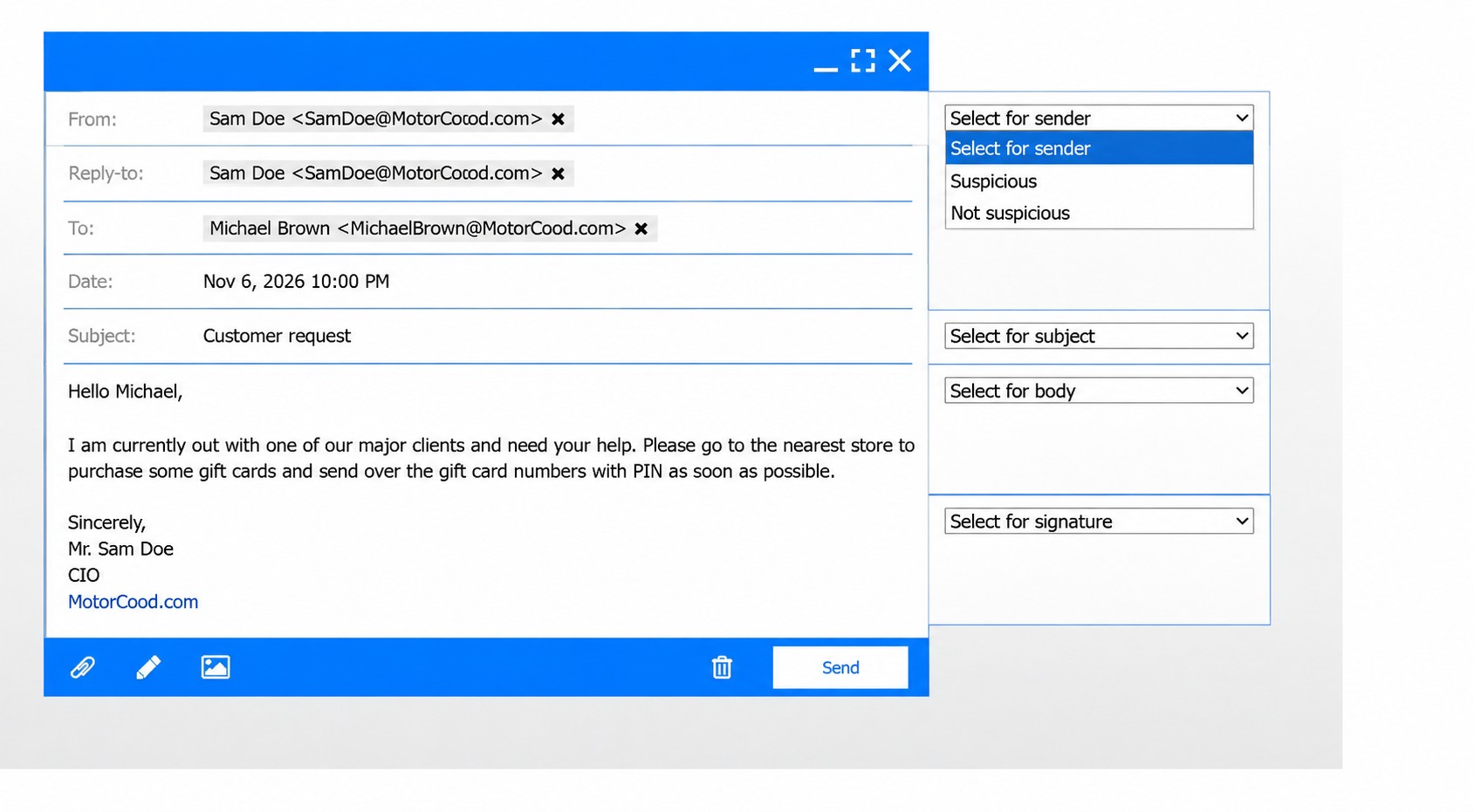
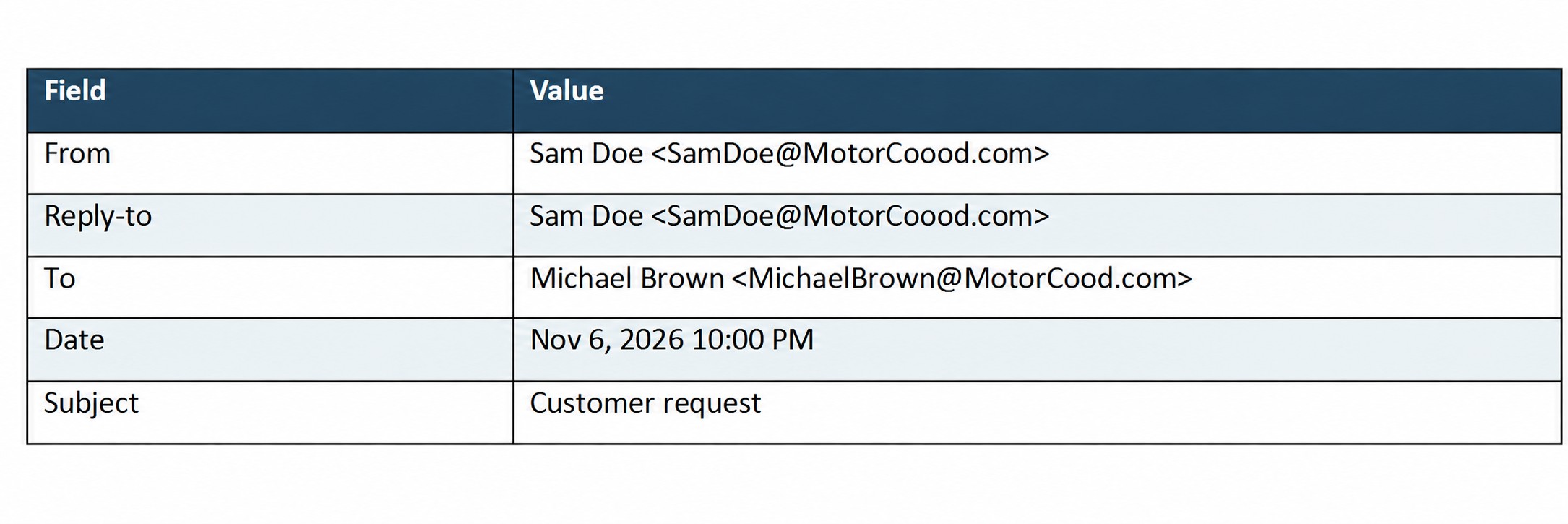
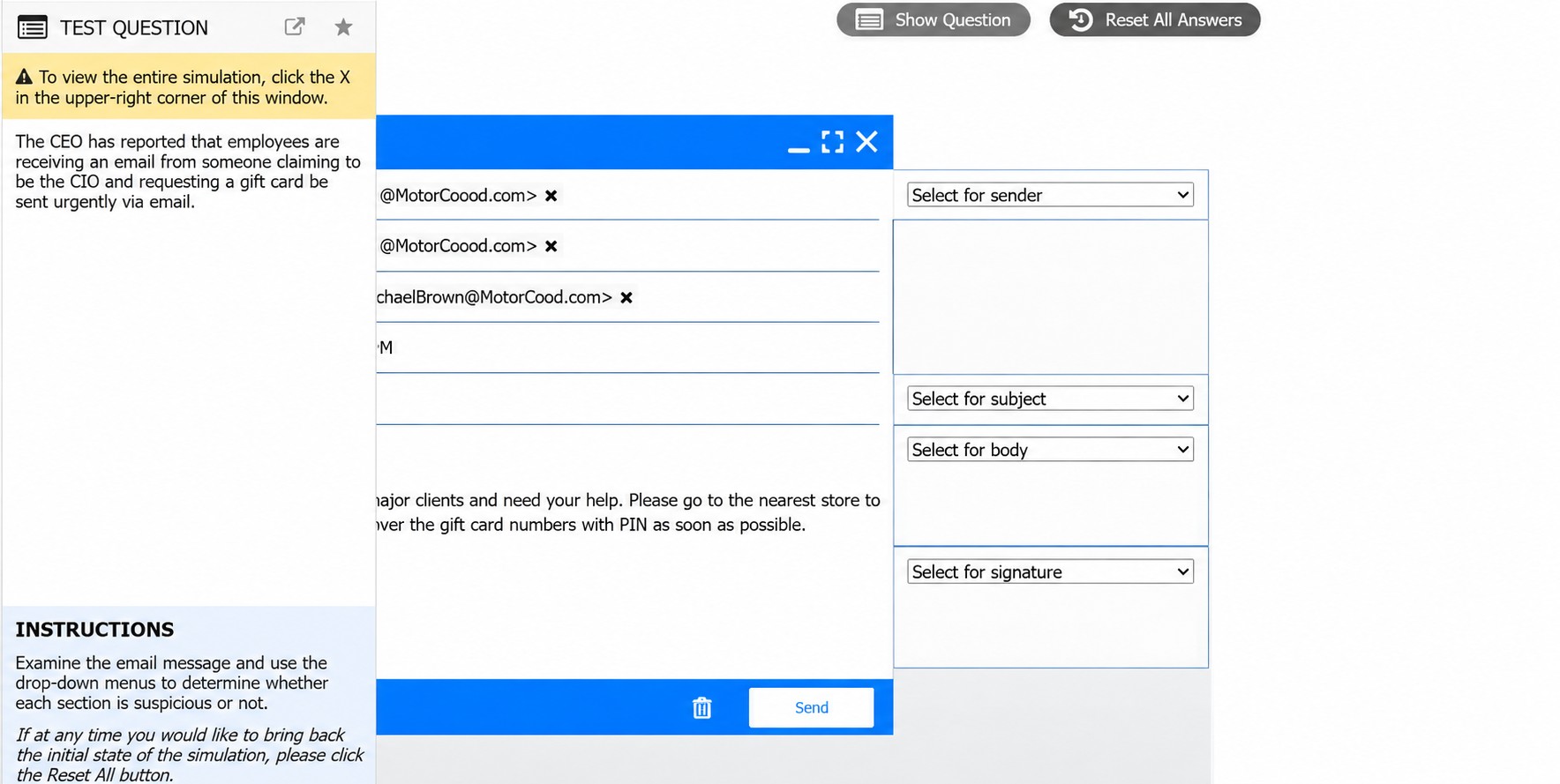
The CIO has reported that employees are receiving an email from someone claiming to be the CIO and requesting a gift card be sent urgently via email.

As a security analyst, you have been assigned to investigate the email message and identify suspicious elements that could indicate a social engineering attack.

INSTRUCTIONS: Examine the email message and use the drop-down menus to determine whether each section is suspicious or not. If at any time you would like to return to the initial state of the simulation, click the Reset All button. In this printed version, clear your selections manually.

Hello Michael,

I am currently out with one of our major clients and need your help. Please go to the nearest store to purchase some gift cards and send over the gift card numbers with PIN as soon as possible.

Sincerely,

Mr. Sam Doe

CIO

MotorCood.com

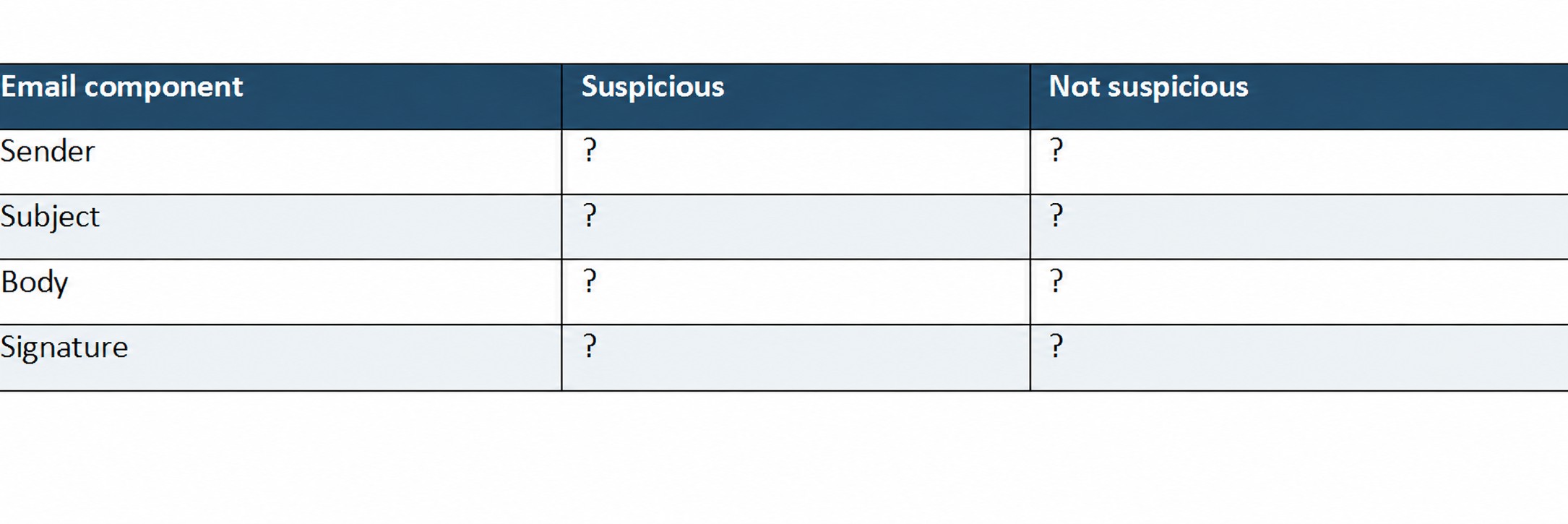
Answer area — Select the appropriate classification

Each drop-down contains the following options: Suspicious; Not suspicious.

Show answerHide answer

Explanation

Judgment Basis

1. Body content is a classic "CEO gift card fraud" script
The email requires the recipient to "go to the nearest store to purchase gift cards and send the card number and PIN as soon as possible." This is one of the most typical variants of Business Email Compromise (BEC). Legitimate companies never use gift cards for business payments or reimbursements, and gift card codes are equivalent to cash once provided—irreversible and untraceable. The email also creates urgency ("as soon as possible"), exploiting employees' psychological instinct to respond quickly to requests from superiors.

2. Sender domain "MotorCood.com" is highly suspicious
The signature domain is MotorCood.com, which is very similar to the normal spelling of "MotorCloud" but differs by one letter. This "lookalike domain" (typosquatting) is the standard method for executive impersonation attacks: attackers register domains that are almost identical to the real company domain, and recipients who don't look carefully can easily mistake them for internal emails. The combination of this domain with the identity of "CIO" constitutes a typical executive impersonation feature.

3. Urgency + unverifiable context
The email states the sender is "accompanying an important client" and cannot confirm by phone. This is precisely the core technique of BEC attacks—creating a scenario where "the boss can't be reached," preventing the recipient from verifying identity through a simple phone call.

Correct Response Recommendations

Do not purchase any gift cards, and do not reply to the email

Directly call the CIO using a known internal phone number (not any contact information provided in the email) to verify

Report to the IT/security team, and retain the original email and complete email headers

If gift cards have already been purchased and codes provided, immediately contact the gift card issuer to attempt to freeze the balance, and report to the company's security department and law enforcement.

That's the last free question

You've seen the free 30% (22 of 76 questions). Full access unlocks every question and full-length SY0-801 mock exams (90 questions, 90 minutes), a different mock on every attempt.

Unlock full mock exam
Full mock exam

Sit the SY0-801 exam before exam day

Full-length mocks with the same number of questions and the same time limit as the real SY0-801 exam. Every attempt draws a new set of questions from the full bank, so you can keep going until you pass comfortably.

Get full SY0-801 mock exam
  • 90questions per mock
  • 90 mintime limit
  • 76questions in the bank
  • Newmock on every attempt