APICS certification · Exam CTSC

CTSC Mock Exam Page 4

Certified in Transformation for Supply Chain (CTSC)

Free CTSC mock exam questions 31–40, each with the answer and an explanation.

20 questions · 33 minutes · free, no sign-up

Free CTSC questions

31–40 of 45 free
Question 31 Choose 1
What is the purpose of using value at risk (VAR) in supply chain risk management?
Show answerHide answer

Correct answer: A To establish a common language to quantify supply chain risk in terms of currency

Explanation

The purpose of using value at risk (VAR) in supply chain risk management is to establish a common language to quantify supply chain risk in terms of currency.VAR is defined as "a statistical technique used to measure and quantify the level of financial risk within a firm or investment portfolio over a specific time frame"2.VAR can help to estimate the potential loss that a supply chain may face due to various sources of disruption, such as demand fluctuations, supplier failures, natural disasters, or cyberattacks13.By expressing supply chain risk in monetary terms, VAR can help to communicate the risk exposure to different stakeholders, compare the risk profiles of different supply chain scenarios, and allocate resources for risk mitigation13.VAR can also help to link supply chain risk management with corporate financial performance and strategy14.
Question 32 Choose 1
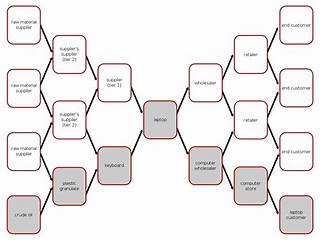
What is the process view of the geographic map that illustrates the material flow, material strategy, and the planning process relationship?
Show answerHide answer

Correct answer: D Thread diagram

Explanation

Explanation: According to the CTSC Enterprise and Supply Chain Management (ESCM) manual, a thread diagram is a process view of the geographic map that illustrates the material flow, material strategy, and the planning process relationship1.A thread diagram shows the sequence of activities and decisions that are involved in transforming raw materials into finished products and delivering them to customers1.It also shows the locations of the facilities, the transportation modes, the inventory policies, and the planning horizons1.A thread diagram helps to identify the key drivers and constraints of the supply chain performance, and to evaluate the trade-offs and synergies among different supply chain components1.
Question 33 Choose 1
The most prominent characteristic of a digital supply chain is:
Show answerHide answer

Correct answer: D access to latest point-of-sale (POS) data across the network.

Explanation

Explanation: one of the most prominent characteristics of a digital supply chain is the access to latest point-of-sale (POS) data across the network.POS data refers to the information collected by retailers at the point of purchase, such as the product, quantity, price, date, time, and location of the transaction3.Access to this data enables digital supply chains to have realtime visibility of customer demand, inventory levels, and market trends, and to use advanced analytics and artificial intelligence to optimize planning, forecasting, replenishment, and delivery12.Access to POS data also helps digital supply chains to improve customer satisfaction, reduce costs, increase sales, and enhance collaboration among supply chain partners12. 
Question 34 Choose 1
A customer is purchasing a new cell phone, and the sales representative convinces the customer to buy a case to protect the phone. The customer representative has engaged in:
Show answerHide answer

Correct answer: A cross-selling.

Explanation

Explanation: cross-selling is the practice of offering customers additional items that complement or enhance their main purchase12. In this case, the sales representative has engaged in cross-selling by offering the customer a case to protect the phone, which is a related and useful product for the customer’s main purchase of a new cell phone. Cross selling can help to increase customer satisfaction, loyalty, and revenue12.
Question 35 Choose 1
The main objective of the ASCM Digital Capabilities Model (DCM) is to:
Show answerHide answer

Correct answer: C guide the development of digital supply networks.

Question 36 Choose 1
A key component of a total quality management (TQM) program is:
Show answerHide answer

Correct answer: A statistical process control (SPC).

Explanation

Explanation: According to the CTSC Exam Content Manual1, statistical process control (SPC) is a key component of a total quality management (TQM) program. SPC is a technique that uses statistical methods and tools to monitor and control the variation and performance of a process. SPC helps to ensure that the process is stable, capable, and predictable, and that the output meets the customer specifications and expectations. SPC also helps to identify and eliminate the causes of defects and errors, and to improve the quality and efficiency of the process. Option B, JIT inventory, is a component of lean manufacturing, not TQM. JIT inventory aims to reduce inventory levels and costs by delivering materials or components just before they are needed in the production process. Option C, autonomous maintenance, is a component of total productive maintenance (TPM), not TQM. Autonomous maintenance involves empowering the operators to perform basic maintenance tasks on their own equipment, such as cleaning, lubricating, inspecting, and adjusting. Option D, SCO, is a component of supply chain management, not TQM. SCO involves optimizing the flow of materials, information, and money across the supply chain network, from the suppliers to the customers.
Question 37 Choose 1
To set improvement priorities, the first step is to:
Show answerHide answer

Correct answer: A build a solid case for change.

Explanation

Explanation: According to the ASCM, the first step in setting improvement priorities for supply chain transformation is to create a business case for change1.This involves highlighting how improvements in the supply chain processes will enable the organization to achieve its strategic goals, such as increasing customer satisfaction, reducing costs, enhancing sustainability, and gaining competitive advantage1.The business case for change should also calculate the improvement potential by using quantifiable business and supply chain metrics, such as revenue, profitability, service level, inventory, and carbon footprint1.Moreover, the business case for change should guarantee cross-functional engagement by involving key stakeholders from different functions and levels of the organization, such as sales, marketing, finance, operations, and senior management1.By creating a solid business case for change, the organization can justify the need for supply chain transformation, secure the necessary resources and support, and align the improvement priorities with the business objectives1.
Question 38 Choose 1
A manufacturing company is implementing new technology in all production lines. To accelerate the change and track the progress, this company should:
Show answerHide answer

Correct answer: C create visibility.

Explanation

Explanation: According to the CTSC Exam Content Manual, one of the ways to accelerate the change and track the progress of a new technology implementation is to create visibility1.Creating visibility means sharing the information and data about the change process, such as the objectives, benefits, milestones, challenges, and results, with the relevant stakeholders, such as the employees, managers, customers, and suppliers1.Creating visibility can help to increase the awareness, understanding, and acceptance of the change, as well as to identify and address the issues and risks that may arise during the change1.Creating visibility can also help to monitor and evaluate the performance and impact of the new technology, and to provide feedback and recognition to the change agents and participants1. The other options are not the best ways to accelerate the change and track the progress of a new technology implementation, as they are more related to other aspects of the supply chain or the change management.Utilizing a pushpull system is a way to balance the demand and supply in the supply chain, but it does not directly affect the speed or the measurement of the change2.Adopting define-test-deploy is a way to implement a new technology in a phased manner, but it does not necessarily accelerate the change or track the progress, unless it is combined with other methods, such as agile or lean3. Identifying current performance drivers is a way to understand the factors that influence the supply chain performance, but it does not help to implement a new technology, unless it is followed by a gap analysis and a solution design.
Question 39 Choose 1
A widget manufacturing company wants to embark on a digital supply chain transformation journey. Which of the following activities should the company's leadership focus on in the beginning?
Show answerHide answer

Correct answer: A Identifying areas of the business that can benefit the most from this in order to prioritize resources

Explanation

Explanation: According to the ASCM CTSC Exam Content Manual, one of the first steps in initiating a digital supply chain transformation is to “identify the business drivers and opportunities for transformation, and prioritize them based on their potential impact and feasibility” (p. 15). This helps the company’s leadership to align the transformation objectives with the strategic goals of the organization, and to allocate resources accordingly. The other activities mentioned in the options are also important, but they should be done after the initial identification and prioritization of the areas of the business that can benefit the most from the transformation.
Question 40 Choose 1
A company wishes to extend its responsive demand-supply matching (RDSM) capabilities to include predictive maintenance of its delivery trucks. This indicates additional focus on which digital discipline?
Show answerHide answer

Correct answer: C Optimize

Explanation

Explanation: According to the CTSC Exam Content Manual1, the optimize digital discipline focuses on using data and analytics to improve operational efficiency and effectiveness, such as predictive maintenance, asset utilization, and resource allocation. Responsive demand-supply matching (RDSM) is a capability that falls under the optimize discipline, as it aims to balance supply and demand in real time using data-driven insights and actions. Extending RDSM to include predictive maintenance of delivery trucks would indicate additional focus on the optimize discipline, as it would help reduce downtime, costs, and risks associated with truck breakdowns.
Full mock exam

Sit the CTSC exam before exam day

Full-length mocks with the same number of questions and the same time limit as the real CTSC exam. Every attempt draws a new set of questions from the full bank, so you can keep going until you pass comfortably.

Get full CTSC mock exam
  • 65questions per mock
  • 105 mintime limit
  • 150questions in the bank
  • Newmock on every attempt